Showing Mercy Unawares
Homily for the Last Sunday after Pentecost
November 22, 2026
Homily for the Last Sunday after Pentecost
November 22, 2026
Homily for November 22, 2026
The Last Sunday after Pentecost
Matthew 25:31-46
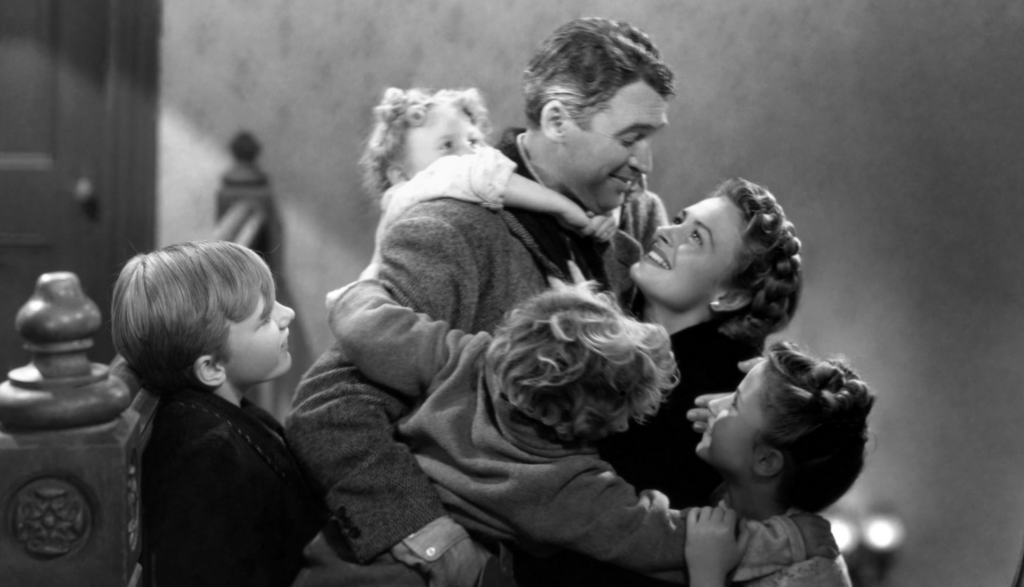
In the classic holiday movie, It’s a Wonderful Life, protagonist George Bailey at one point becomes so despairing that he wonders if his hometown of Bedford Falls might be a better place had he not been born. His guardian angel, Clarence, comes to George’s rescue and grants George a vision of what Bedford Falls might look like, were it not for George. Without George, Bedford Falls was a dark, corrupt town called Pottersville in which George’s neighbors are much worse off or and some of them even dead. Through the vision George is made aware that his seemingly humdrum, small-town life has had much more impact than he realized. Over the course of years the myriad, unremembered small kindnesses that George showed to his neighbors had made Bedford Falls a better place.
I want to get back to George, but first, this morning’s Gospel lesson.
Of note in this morning’s so-called “Parable of the Sheep and the Goats” is that neither the “sheep” nor the “goats” knew that they were helping or not helping Jesus. “Lord,” said the sheep:
When was it that we saw you hungry and gave you food, or thirsty and gave you something to drink? And when was it that we saw you a stranger and welcomed you, or naked and gave you clothing? And when was it that we saw you sick or in prison and visited you?
Similarly, the “goats” asked:
Lord, when was it that we saw you hungry or thirsty or a stranger or naked or sick or in prison and did not take care of you?
Both the “sheep” and the “goats” were surprised to hear Jesus say that, “Just as you did it” or “Just as you did not do it” to “one of the least of these… you did it to me.” In this morning’s Gospel lesson, the actions upon which the sheep and goats were judged were to them so routine, so habituated, that they were not aware that they had done them.
Today’s Gospel comprises the final verses of Matthew before Jesus’ public ministry gives way to the Passion narrative in Matthew chapter 26. As such today’s Gospel lesson gathers up the previous 25 chapters, the entirety of Jesus’ teaching and ministry, to set forth Matthew’s ideal disciple, which is one who shows mercy. For Matthew, the ideal disciple is one whose life has become so formed, so steeped, in showing mercy, that he is not even aware he’s showing it.
“Blessed are the merciful,” said Jesus at the opening of the Sermon on the Mount, “for they will receive mercy” (5:7). “Go and learn what this means,” Jesus told those who complained of his eating with tax collectors and sinners, “I desire mercy, not sacrifice” (9:13). “Have mercy on me, Lord,” the Canaanite woman begged Jesus, asking him to heal her daughter (15:22). “Have mercy on us, Son of David,” cried the two blind men by the side of the road, hoping Jesus would heal them (12:7). “Woe to you,” said Jesus to the Pharisees, “You tithe mint, dill and cumin and have neglected the weightier matters of the law: justice, mercy and faith” (23:23). Mercy is key in Matthew’s Gospel, and those who would be Jesus’ disciples are called to show mercy (e.g., 18:33).
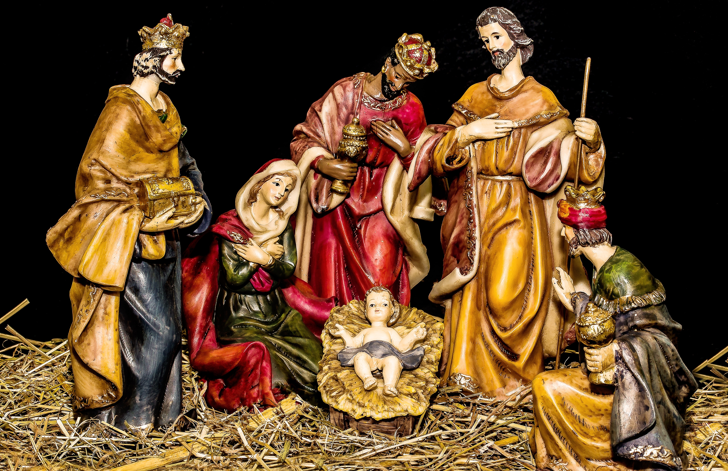
And Matthew’s hope for disciples is that showing mercy would become habitual and second-nature. For example, mercy was second-nature to Joseph, Jesus’ father. In chapter 1, when Joseph found that Mary was with child and not by him, he “planned to divorce her.”
But just when he had resolved to do this, an angel of the Lord appeared to him in a dream and said, “Joseph… do not be afraid to take Mary as your wife, for the child conceived in her is of the Holy Spirit” (1:20). “When Joseph awoke… he did as the angel… commanded him” (1:24).
Joseph had mercy.
Mercy was second-nature to the Magi. In chapter 2, when Herod was frightened by the news that a child had “been born king of the Jews,” and when he sought to locate the infant Jesus, “having been warned in a dream not to go back to Herod, [the Magi] left for their own country by another road” (2:12). The Magi had mercy.
Mercy was second-nature to the king who in the parable (in chapter 18) forgave the slave a massive debt:
One who owed [the king] ten thousand talents was brought to him, and, as he could not pay, the [king] ordered him to be sold, together with his wife and children and all his possessions and payment to be made. So the slave fell on his knees before him saying, “Have patience with me, and I will pay you everything.” And out of pity for him, the Lord of that slave released him and forgave him the debt. (18:24-27)
The king had mercy.
Mercy was second-nature to Joseph of Arimathea who, after Jesus’ crucifixion, disregarding the dangers from both the Roman and Jewish authorities, boldly asked for Jesus’ body to bury:
When it was evening, there came a rich man from Arimathea named Joseph, who was himself a disciple of Jesus. He went to Pilate and asked for the body of Jesus; then Pilate ordered it to be given him. So Joseph took the body and wrapped it in a clean linen cloth and laid it in his new tomb… (27:57-59)
Joseph of Arimathea had mercy.
George in It’s a Wonderful Life had no idea that his lifetime of small kindnesses had made Bedford Falls a better place. George’s actions were so habitual and had become to him so second-nature such that he was unaware that he was doing them. Had George been in Matthew’s Gospel, he well might have asked along with the “sheep,” “Lord, when was it that I saw you hungry and gave you food, or thirsty and gave you something to drink? And when was it that I saw you a stranger and welcomed you, or naked and gave you clothing? And when was it that I saw you sick or in prison and visited you?”
I am proud that we here at Trinity do as much as we do to feed the hungry, give drink to the thirsty, welcome the stranger, clothe the naked and visit the sick and those in prison. I hope that we continue to grow in showing mercy. And I pray that our mercy becomes so second-nature that we are blissfully unaware of how merciful we have become. Except perhaps - as our lives become more and more aligned with Jesus and his mercy - we will come to know a strange, unaccountable joy.






Homily for the Seventeenth Sunday after Pentecost

















Homily for the Marriage of Joel Diamond and Eliza Cotter

Homily for the Feast of the Baptism of Our Lord