Bread to Satisfy the Soul
Homily for the Tenth Sunday After Pentecost
August 2, 2026
Homily for the Tenth Sunday After Pentecost
August 2, 2026
Homily for Sunday, August 2, 2026
The Tenth Sunday After Pentecost
Matthew 14:13-21
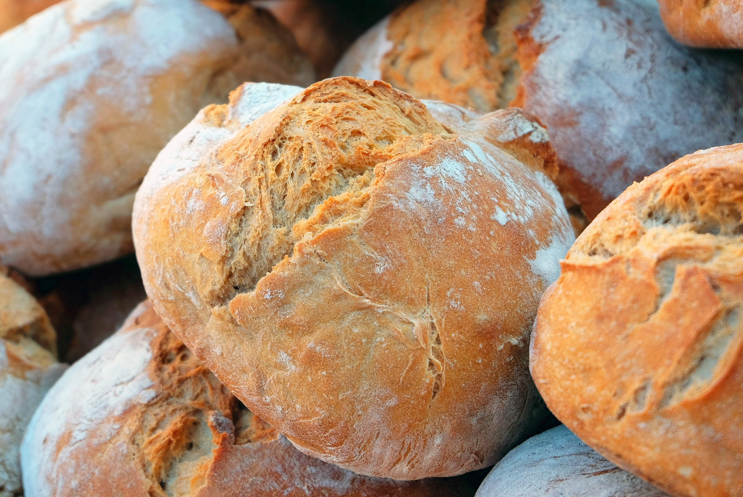
In Dostoevsky’s The Brothers Karamazov, Ivan, the intellectual, “atheist” middle brother, tells a story about Jesus appearing in Spain at the time of the Inquisition. After healing a blind man and raising a girl from the dead, Jesus is mobbed by the people… and arrested by the Inquisition. Referring both to the story of Jesus’ temptation in the wilderness (in which Satan tempted Jesus to turn stones into bread) and also to this morning’s Gospel lesson with the story of the Feeding of the Five Thousand, the Grand Inquisitor queries Jesus:
Thou wouldst go into the world… with empty hands… with some promise of freedom which men in… their natural unruliness cannot even understand… But seest Thou these stones in this parched and barren wilderness? Turn them into bread, and mankind will run after thee… Thou didst promise them the Bread of Heaven, but… can it compare with earthly bread in the eyes of the weak, ever sinful and ignoble race of man? If for the sake of the Bread of Heaven thousands shall follow Thee, what is to become of the… tens of thousands of millions… who will not have the strength to forego the earthly bread for the sake of the heavenly?
The Grand Inquisitor distinguishes between earthly bread and heavenly bread, and he suggests the vast majority of people want the earthly rather than the heavenly bread. We’ll get back to Dostoevsky and the Grand Inquisitor, but first, some scriptures.
In John’s account of Jesus feeding the five thousand, Jesus calls the people out for following him for earthly bread only: “You are looking for me not because you saw signs but because you ate your fill of the loaves. Do not work for the food that perishes but for the food that endures for eternal life, which the Son of Man will give you” (Jn 6:26-27). In Matthew’s account,there is no such calling out, for in the Sermon on the Mount Jesus already has clarified that his mission is about “heavenly” bread:
Do not worry about your life, what you will eat or what you will drink… Is not life more than food… Look at the birds of the air: they neither sow nor reap nor gather into barns, and yet your heavenly Father feeds them. Are you not of more value than they? (Mt 6:25-26)
And it’s not that Matthew wouldn’t have known the importance of earthly bread. This was the first-century, and Matthew’s community would have weathered food shortages. And if, as some scholars believe, the Gospel was written in Galilee, Matthew’s community would have survived the famines brought on by the First Jewish Revolt in which hundreds of thousands are thought to have starved to death. Matthew knows the importance of earthly bread.
Matthew knows, too, of the Hebrews’ experience in the wilderness during the exodus. As in Egypt God “observed the misery of [his]people… and heard their cry” (Ex 3:7), so in this morning’s Gospel Jesus has “compassion” on the people. If in the exodus the people were in the wilderness, so does the feeding of the five thousand take place in the wilderness. If in the exodus the people complained about not having enough food, (e.g., Ex 16:3), so in Matthew do the disciples express concern about not having enough food. As in the exodus God sent the people manna from heaven, so in Matthew does Jesus provide the crowds bread in abundance. And just as in the exodus all were able to eat their fill – “they gathered as much as each of them needed,” says Exodus (Ex 16:18) – so in this morning’s Gospel lesson “all ate and were filled.”
Further, note how Matthew places his account of Jesus feeding the five thousand immediately after King Herod’s banquet in which a young girl presented to her mother on a platter not food but John the Baptist’s head. The contrast between Herod’s cruelty and stinginess, and Jesus’ compassion and abundance could not be more clear.
Additionally, immediately after today’s lesson (in a story we will hear next week), Jesus invites Peter to walk on water.
“Jesus said, ‘Come.’ So Peter got out of the boat… But when he noticed the strong wind, he became frightened, and beginning to sink, he cried out, ‘Lord, save me!’ Jesus immediately reached out his hand and caught him, saying… ‘You of little faith, why did you doubt?’”
Given that Matthew speaks not of earthly but of heavenly bread, given that Matthew connects his story to the exodus, given that Matthew placed this story immediately after Herod served on a platter not food but John the Baptist’s head, and given that in the story immediately following Jesus says to Peter, “You of little faith, why did you doubt?” [given all these] I wonder if Matthew is trying to convey to us that the wholeness we seek – the wholeness that all human beings seek – is to be found in Jesus. When we ourselves feel we are in “Egypt,” Jesus hears our cry and has compassion. When we travel through “wilderness” and are “hungry,” it is Jesus who feeds and sustains us. In contrast to the “Herods” of this world who flex their greed and corruption, Jesus offers humble service. If we are anxious about not having enough, Jesus assures that with him we have an abundance. If at Jesus’ behest we step out of our “boat” and onto the “deep,” Jesus reaches out his hand should we begin to sink. The wholeness we seek, suggests Matthew – the wholeness that all human beings seek – is found in Jesus.
Getting back to Dostoevsky and the Grand Inquisitor… Shortly after he began The Brothers Karamazov, Dostoevsky’s two-year-old son, Alyosha,died. Consumed by grief, Dostoevsky made a retreat at the Optina Pustyn monastery, about 160 miles southwest of Moscow at the edge of a vast forest that is now a national park. There Dostoevsky met the monk St. Ambrose of Optina, whose influence we see in The Brothers Karamzov, such as in the quote (spoken by the Grand Inquisitor to Jesus): “There is something about which You were right. The mystery of human existence lies not in just staying alive, but in finding something to live for.” St. Ambrose said also that: “Prayer is food for the soul. Do not starve the soul. It is better for the body to go hungry.”
I am grateful we live in an age of plenty. I am grateful that our parishes help to provide “earthly” bread through The Centre St. Food Pantry. But – to quote Jesus again in the Sermon on the Mount – “Is not life more than food…?” “Yes,” Matthew says definitively, life is more than food; we have souls to feed. Jesus is “the bread of life;” it is Jesus who offers the wholeness we human beings seek. “Whoever comes to me will never be hungry,” Jesus said, “and whoever believes in me will never be thirsty” (John6:35). Why not take up Jesus on his invitation and bring to him our inner “multitudes”? As he did with the crowds in Matthew, Jesus will have compassion, and he will heal. And he will offer in abundance the bread – his “bread” – than which nothing is more satisfying to our souls.














Homily for the Marriage of Joel Diamond and Eliza Cotter

Homily for the Feast of the Baptism of Our Lord