Drinking from Scriptural Wells
Homily for the Third Sunday in Lent
March 8, 2026

Homily for the Third Sunday in Lent
March 8, 2026
Homily for Sunday, March 8, 2026
The Third Sunday in Lent
Exodus 17:1-7
John 4:5-42
(Gen 26:18-26)
Last week we considered the story in Augustine’s Confessions of Alypius, Augustine’s student and friend who, once having witnessed the state-produced spectacle of the Roman gladiatorial games, became addicted and couldn’t pull himself away. Returning again and again to view the violence, Alypius “imbibed a savageness,” wrote Augustine, “and became delighted with the guilty context and drunken with the bloody pastime” such that (writes Augustine) Alypius “became wounded in his soul more deeply than were the gladiators in their bodies.” In some ways, we are Alypius. Though we maybe safe in our bodies, our eyes regularly not in amphitheaters but on phones and computers see a “spectacle” of violence: state-produced footage of, say, drones attacking boats, of masked men with guns in city streets, of officers making violent arrests, of tattooed prisoners subdued behind bars, and – more recently – the devastation of war in Iran. As Alypius was wounded in his soul by what he had seen, so, too, can we be wounded in our souls by what we see. And just as Alypius’ friends needed to intervene to pull him away from his addiction, so, too, might we need an intervention to help pull us away and to heal us from what we see in our present-day, state-produced “spectacle.”
The scripture lessons for the Sundays in Lent offer an intervention for healing wounded souls. Last Sunday, the first step of the journey, God told Abram to “Go from your country and your kindred and your father’s house to the land that I will show you;” and Nicodemus came by night to see Jesus. “There is another land,” God says in effect to Abram – a “kingdom,” to use Gospel language – “Come, and I will show it to you.” And if we would find healing, it could be that Jesus is inviting us like Nicodemus into deeper encounter with him. Like Nicodemus, “Come away from the crowds,” Jesus invites, “maybe come to me like Nicodemus in the dark – away from any ‘spectacle’ – for I want to spend time with you one-on-one, face-to-face, to speak words of love, how ‘God so loved the world that he gave his only Son, so that everyone who believes in him may not perish but may have eternal life.’”
Today’s lessons from Exodus and also John describe the process of healing Jesus offers. First, Exodus reminds us that our journey to healing often will take us through “the wilderness” and that healing tends to happen “by stages:” “From the wilderness of Sin (or Sinai),” writes Exodus, “the whole congregation of the Israelites journeyed by stages.” Exodus reminds us, too,that we need not make this journey alone: it was “the whole congregation of Israel” that journeyed. Further, Exodus reminds us that often it is human nature to resist our own healing: “Why did you bring us out of Egypt?” complained the people against Moses, “to kill us and our children and our livestock with thirst?” And lastly, even though we may “thirst” and like the Israelites feel as though we are perishing, yet we can trust God to give water: “Go on ahead of the people,” the Lord said to Moses, “Strike the rock, and water will come out of it, so that the people may drink.” Even though in the wilderness we may see nothing but rock, yet God can give water even from the “rock.”
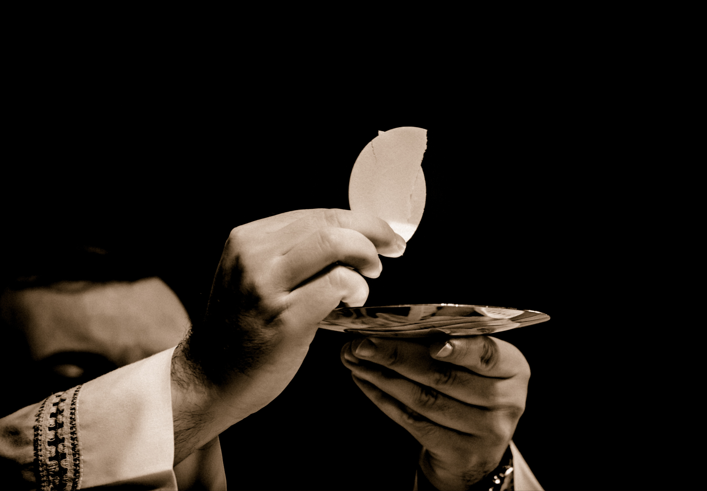
Today’s Gospel story of Jesus meeting the woman at the well is John’s riff on the Old Testament story of “boy meets girl at well,” like Isaac and Rebecca, and Jacob and Rachel. Typical of John, this story is spiritually deep and suggests multiple things about the healing Jesus offers. Among them: If last week Nicodemus came to Jesus alone and under the cover of darkness, today’s story takes place in bright sunlight – “It was about noon,”John writes – and it takes place in the company of others, the disciples and“many Samaritans from that city.” If we are to find healing, it helps at some point to “go public” about our desire for Jesus and to be in the company of fellow seekers. Second, if last week’s Gospel was short because Nicodemus had only a few things to say to Jesus, today’s Gospel is long in part because the woman has much to say: “Sir, you have no bucket and the well is deep;” “Sir, give me this water, so that I may not… have to keep coming here;” “Sir, I see that you are a prophet,” and so forth. Jesus invites us to engage with him, and the more we come to know him, the more we tend to engage. Further, note that Jesus has “living water.” I have a hunch that most if not all of us, when we have found ourselves “thirsty,” have experienced that “spring of water gushing up” of which Jesus speaks. I encourage us not to forget that “spring,” for if once Jesus gave us a “well” gushing up within, chances are that he will give us such “water” again. Note, too, how in addition to offering “living water,” Jesus offers “food to eat that you do not know about.” Given John’s sacramental focus, these words likely refer to the Eucharist. But even if we were a catechumen and had not yet received the Eucharist, yet might we already have begun to taste some of Jesus’ “food.” Our appetite for Christ grows as we grow; and the more he feeds us his “bread,” the greater becomes both our hunger and our capacity to eat it.
Today’s scripture passages are deep and rich. Why not this week set aside some time to pray with them? Mark out the time in your calendar, find a place where you won’t be disturbed, turnoff your phone, and ask Jesus to be present with you and to give you a grace. Are you “thirsty?” He can give you not just water but “living water.” Are you “hungry?” He has “food to eat that you do not know about.” Do you have something you wish to unburden? Here is a man who can tell you“everything you have ever done” and will know just how to listen.
The root behind the word“salvation” is the same as that behind the word “salve,” or “heal.” Jesus offers to “salve” us with his “salvation.” No matter how deep the wounds, the rivers of Jesus’ salvation (Jesus’ healing) run deeper. If we like Nicodemus and like the woman at the well can let him near, the “water” that Jesus will give will become in us a spring of water gushing up to eternal life.
You already have in the order of service the scripture citations for this morning’s lessons. I’m going to give you one more verse of scripture you may wish to spend time with this week, Genesis chapter 26 verse 18: “Isaac dug again the wells of water that had been dug in the days of his father Abraham, for the Philistines had stopped them up after the death of Abraham.” Commenting on this verse in the third century, Origen understood Abraham’s “wells” to be scripture, the sacraments and prayer. These “wells” Origen said, often are covered over by “the Philistines” in our lives. Why not this Lent like Isaac “dig again the wells of water that had been dug” in earlier days and that “the Philistines” may have stopped up? As was the Lord at the rock waiting for Moses to strike it so that water might come out and the people could drink, so is the Lord at these “rocks” of scripture, sacraments and prayer, waiting for us to “strike” them so that water might come out. And as was Jesus waiting at the well, and the Samaritan woman came to him, so is Jesus waiting for us at these “wells” of scripture, sacraments and prayer, waiting for us to come to him, so that he might help us like Isaac to “dig” them again, and to find there Jesus, and his “spring of water gushing up to eternal life.”


Homily for the Seventeenth Sunday after Pentecost


















Homily for the Marriage of Joel Diamond and Eliza Cotter

Homily for the Feast of the Baptism of Our Lord