Matthew and the Magi
Homily for the Christmas II
January 4, 2026
Homily for the Christmas II
January 4, 2026
Homily for Sunday, January 4, 2026
Christmas II
Matthew 2:1-12
by Paul Henry, Lay Preacher
Christmas is a time when we celebrate the birth of Jesus; we sing familiar carols, and delight in joyous music that permeates the season, and lifts our spirits. In addition to enjoying the music here at Trinity, I always find time to watch Judy Garland’s Christmas Special which aired in 1963. In one scene her young son, Joey, sings a song from the musical Oliver, which includes the following refrain “where is love, does it fall from skies above?” This might well have been something the three Magi were asking themselves when they followed a star to Bethlehem a little over two thousand years ago.
We are often invited to return to the Gospels, to contemplate the information presented, the concepts introduced, and the teachings written there for our instruction. We are encouraged to imagine what it might have been like to be present in one of the scenes depicted in the Gospels, including what we saw, heard, felt, or even what smells we might have encountered in that place and time.
We do not know who wrote the Gospels, though through tradition we ascribe the names of two apostles, Matthew and John, and two men thought to have been associated with Paul’s ministry, Mark and Luke, as their authors. Only two Gospels reference the birth of Jesus– Matthew and Luke – and they do so in different ways. And of course, the birth of Jesus has been celebrated by authors and songwriters ever since.
Many of us grew up singing songs about the birth of Jesus, including “We Three Kings of Orient Are” – a Christmas Carol written by The Reverend John Henry Hopkins, Jr.in 1857. He was the Rector of Christ Episcopal Church in Williamsport, Pennsylvania, and he wrote the carol for a Christmas pageant that would take place the next year in New York City. It became the first widely popular Christmas carol written in America, and it was based on an account in the Gospel attributed to Matthew.
When the carol was written it was also known as “The Quest of the Magi", while the Gospel itself refers to a visit to the baby Jesus by three “Wise Men.” We may want to consider whether the three men who come to worship the baby Jesus are Kings, Magi or Wise Men, as this might help us to understand – and experience at a distance – the story we are presented with. Again, we must remember that the material we find in the Bible has been carefully composed to convey a message. It can simultaneously be parts historical and theological, though above all the stories are guides to a deeper understanding of our relationship with God and with one another.
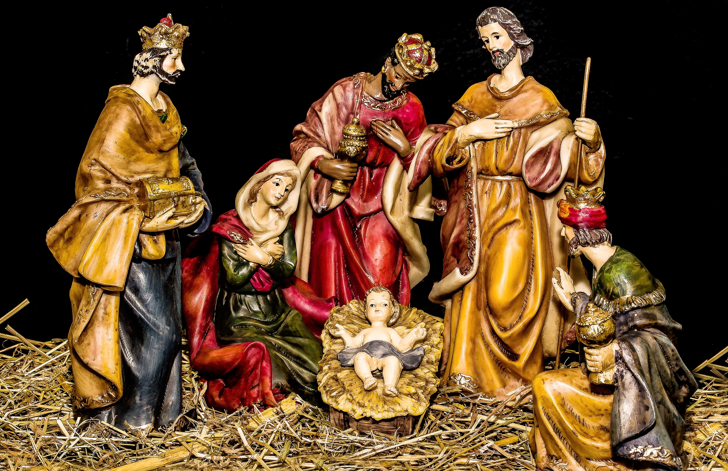
Whether or not you are more familiar with the Gospel, or with Reverend Hopkins’ Christmas Carol,they both give us some of the same essential information: Three men come from a distant land; their journey has been a long one, they are following a bright star in the sky, an it is leading them Westward, ultimately to Bethlehem. There are also some differences between the two. Hopkins informs us that the three men are kings from the Orient, named Gaspard, Melchior, and Balthazar, and that they have brought him gifts – gold to crown him; incense for prayer and praising; and myrrh for anointing. In Matthew we learn that these are three Wise Men from the East who come to Jerusalem saying, “Where is he who is born the King of the Jews?” When Herod heard about this, he, and all Jerusalem, were troubled. Indeed, we can well imagine his fear of a newborn being identified as a King of the Jews and a potential rival for his throne – especially if those wise men were Magi from Parthia. Prior to the rule of Herod, Judea enjoyed a period of Jewish independence under the Hasmonean Dynasty, which ruled from 141 to 37 BC. The Hasmoneans had made an alliance with the Parthians, which infuriated the Romans, who in turn invaded Judea, overthrew their rulers, and replaced them with Herod. Herod was a rival of the Hasmonean Dynasty,having as many of them killed as he could, included their infant children,which may have provided a historical memory for the story we know as “The Killing of the Innocents.” What if these Magi from Parthia – these ancient priest-astrologers– had discerned that a baby would be born who could be a threat to Herod’s throne?
Matthew is making it clear that the birth of this baby is unlike any other and is ordained by God. Moreover, our priest-astrologers from the Parthia have recognized the signs that a future ruler will be born and have traveled a great distance to find him. When they do, they are filled with joy, offer him gifts, and praise God. This is an act of recognition and gratitude,and their presence in Bethlehem also points to the cosmic significance of this birth, while the gifts of the three Magi foretell three critical stages in the life of Jesus: his birth, his ministry, and his crucifixion.
Matthew’s Gospel was written, according to most scholars, between 70 and 80 A.D. Mathew himself was a publican; that is, a Jew who collected taxes from his Judean countrymen on behalf of the Romans. This made him an outcast in Jewish society. And yet he was made an apostle in the ministry of Jesus, because he was able to see the saving essence of Jesus of Nazareth, and his testimony to this truth was considered so important, that his Gospel was placed before the others.
Matthew was one of the few disciples who could both read and write – skills that were necessary for a tax collector. Indeed, a tax collector in the first century AD would have had to record accounts in several languages and be familiar with multiple communities. Perhaps this is how he learned of the visit of the Magi to the baby Jesus.
What Matthew may have learned about the Magi, and what they clearly believed, is that a star in the sky would take them to a place where a newborn infant would become a king – not just of the Jews, but of all humanity. And that is an important part of the Gospel;the Magi who came to worship Jesus were Gentiles and not Jews, and a sign that God intended the birth of his Son to be received and recognized by all peoples. This would be a king who would reign forever,a light for all humankind, and a demonstration of God’s unbounded love.
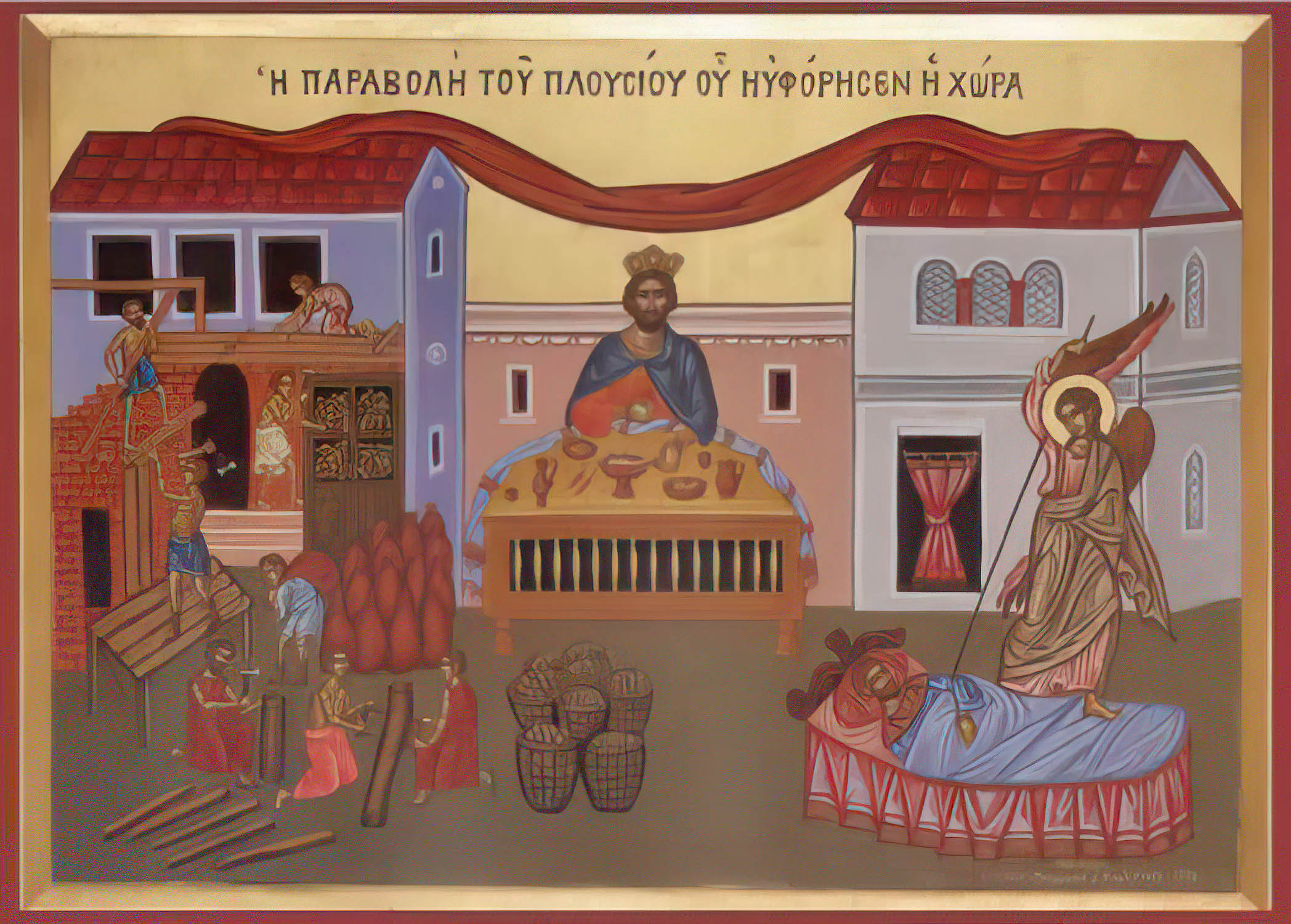
Why is it that only the Gospel of Matthew relates this story? Perhaps it is because it had a special relevance for Matthew himself. When Matthew left his tax booth to follow Jesus,he was not only relinquishing an important post, but he was also giving up his riches. Likewise, the Magi give up their riches. And this is a central point of the story. Our lives before we encounter Jesus, and after, may not seem that different. But this Gospel of Matthew is telling us what it means to be a follower of Jesus. The pilgrimage that the Magi make,their gifts, and their worship – signify what we must do to truly follow Christ. The journey may be difficult. The Magi traveled over 1300 miles to find the promised King. Every mile was dangerous, and it would have taken months. Desert sands, treacherous mountains to cross, with lions, serpents and bandits along the way. A metaphor for the perils we may encounter in our own lives or on our spiritual journey.
Like the Magi,we follow a star. We sense that love does fall from skies above. When we reach the destination that the star points us to, we recognize that we are in a place where we can have a new, more intimate and fulfilling relationship with God. The destination we seek, the journey we take, the gifts that we bring, is a story that has echoed through the ages. A newborn that is God in human flesh. A prophecy fulfilled. That is worth singing about.


Homily for the Seventeenth Sunday after Pentecost

















Homily for the Marriage of Joel Diamond and Eliza Cotter

Homily for the Feast of the Baptism of Our Lord