Otherness, Uncertainty, Ambiguity and Friction
Homily for the Marriage of Joel Diamond and Eliza Cotter
February 11, 2026

Homily for the Marriage of Joel Diamond and Eliza Cotter
February 11, 2026
Homily for Wednesday, February 11, 2026
The Marriage of Joel Diamond and Eliza Cotter
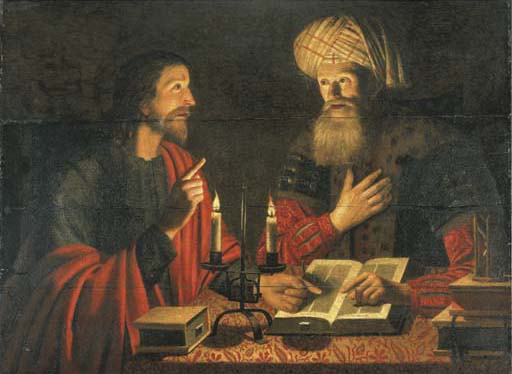
Joel and Eliza, I commend you for your choice of the story of Nicodemus and Jesus in John chapter 3 as the Gospel lesson for your wedding today. While I imagine that the passage’s famous verse about love played a role in your choice – “For God so loved the world that he gave his only Son, so that everyone who believes in him may not perish but have eternal life” – I suspect also that your good instincts may have intuited how much this passage can teach about the challenges of close relationships.
First, note the “otherness”in this passage. I this passage Jesus and Nicodemus speak past each other; they speak in different planes, as it were. For example, “You must be born from above,” says Jesus; “How can anyone be born after having grown old?” asks Nicodemus. “Can one enter a second time into the mother’s womb and be born?” Similarly, as much as we may have in common, as similar as we may be in many ways, yet our partner to an extent will always have an element of “otherness;” our partner will always be “other.”
Second, note the uncertainty and ambiguity in this passage. “The wind blows where it chooses,” says Jesus, “and you hear the sound of it, but you do not know where it comes from or where it goes. So it is with everyone who is born of the Spirit.” Nicodemus probably speaks for all of us when he asks, “How can these things be?” Similarly in our intimate relationships, as much as we think we know ourselves, and as much as we think we know our partner, and as good as we may be at communication, our relationships will be marked by uncertainty and ambiguity. Uncertainty and ambiguity are part of the landscape of all intimate relationships.
Lastly, note also the friction in their encounter: “Are you a teacher of Israel,” Jesus asks, “and yet you do not know these things?” “If I have told you about earthly things and you do not believe, how can you believe if I tell you about heavenly things?” Similar to Nicodemus’s encounter with Jesus, all intimate relationships involve friction.
“Otherness,” uncertainty and ambiguity, and friction are not “bugs” in a relationship – they are feature of a relationship. The question is not howto “solve” these supposed “problems;” rather, the question is: How will you live with and find meaning in and make sense of this “otherness,” this uncertainty and ambiguity, and of this friction?
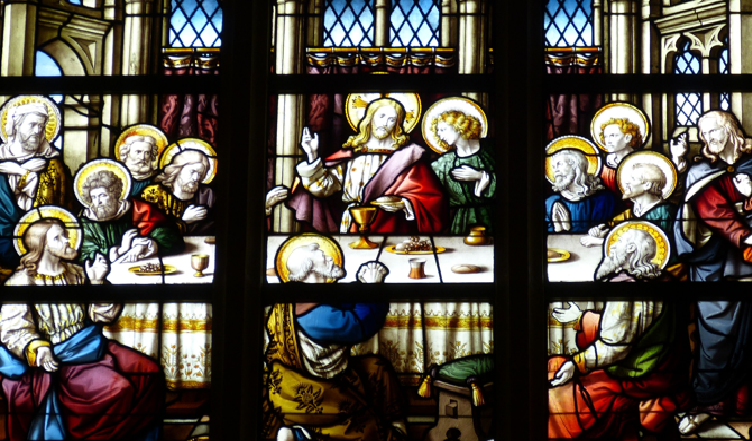
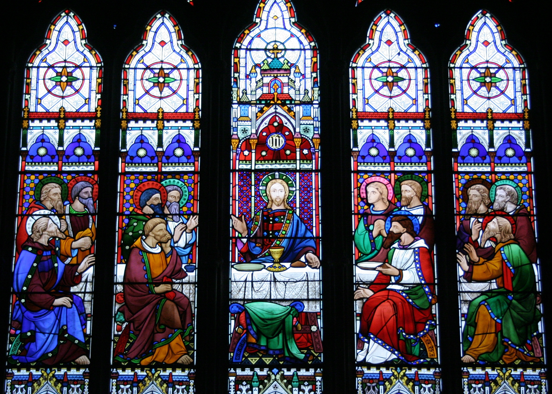
Again, Joel and Eliza, I commend your instincts in choosing a passage from John for today’s Gospel lesson because John’s Gospel is in a way a roadmap to developing deeper, more meaningful, more love-filled relationships within a context of otherness, ambiguity and friction. For example, today’s Gospel story of Nicodemus’ encounter with Jesus, coming near the beginning of the Gospel, takes place in the dark, suggesting “otherness,” uncertainty, ambiguity, and friction. One chapter later Jesus’ encounter with the woman at the well takes place “at about noon,” John writes, in broad daylight, and Jesus and the woman have a spirited, even playful, exchange. Here John’s roadmap to deeper intimacy moves from darkness to light and includes play. In John chapter 9, Jesus opens the eyes of the man born blind. The man’s newly-found sight puts him in conflict with those who have always known him to be blind. This story not only suggests how our “sight” and our ability to truly “see” our partner develops over time, but also begs the question how we respond when our partner has grown and changed and is no longer the same as when we married them. And in his latter chapters John develops intimacy in its fullest form, for here John introduces the so-called “Beloved Disciple” who reclined at Jesus’ heart at the Last Supper (John 13:23). The Beloved Disciple gives what is perhaps the supreme gift of intimacy by accompanying Jesus through his Passion and death. Note that wherever we may find ourselves on this “roadmap” to intimacy that is John’s Gospel, our journey will not be linear – at any time we can find ourselves back at the beginning with Nicodemus.
As challenging as it may be,“otherness” helps to make a relationship. What kind of a relationship would it be if our partner were not in someway “other”? How could we (to quote the apostle Paul) [how could we] learn to be patient and kind; not envious,boastful arrogant or rude; not insist on our own way and not be irritable, if our relationship was not marked by at least some uncertainty and ambiguity? And how could we develop in our capacity to “bear all things, believe all things, hope all things, endure all things” if our relationship did not have some degree of friction?
We know that love is more than a feeling. As we learn from the story of Jesus and Nicodemus, authentic love is an encounter that involves otherness, uncertainty, ambiguity and friction. As we learn from other stories in John’s Gospel, love has ethical demands and responsibilities. As it did for Jesus at his Passion, love means the possibility of suffering. And as the story of Judas shows, if love is to be freely chosen, love must also include the possibility of breakup. Again and again in John’s Gospel, in his “roadmap” to deeper intimacy, he shows that authentic love involves persistence and effort and sometimes the ability to simply “be” – or, to use John’s language, to simply “abide” – even as we are uncertain and in the dark.
The question is not how to “solve” these supposed “problems,” but rather: How will you live with and find meaning in and make sense of these experiences when they happen?
Nicodemus offers us hope for the possibility of living with and making sense of these experiences and finding in them an authentic and ever-deepening love, for Nicodemus appears not only near the beginning of John’s Gospel, but he appears also at the end. In chapter 19, after Jesus’ death: “Nicodemus, who had first come to Jesus by night… came bringing a mixture of myrrh and aloes weighing about a hundred pounds. They took the body of Jesus and wrapped it with the spices in linen cloths” (19:39-40). Though his first encounter with Jesus was marked by “otherness,” uncertainty and ambiguity; and though Nicodemus was “in the dark” and unable to fully “see” Jesus; and though their encounter was marked by friction, yet Nicodemus must have been able to live with and to find meaning in and to make sense of his experience because Nicodemus was with Jesus until the end; he was with Jesus –as you will vow shortly – “until they were parted by death.”
Joel and Eliza, I am excited for you as you enter this new stage on your journey. I trust that your instincts in choosing a lesson from John’s Gospel – in choosing the story of Nicodemus’ encounter with Jesus – will serve you well as you continue on your journey. May Nicodemus serve as a guide and John’s Gospel as a roadmap as you seek an authentic and ever-deepening love that will of course be marked by “otherness,” uncertainty, ambiguity and friction. And know that the One to whom Nicodemus was drawn and with whom he remained until the end, will likewise – if you let him –hold you in love, teach you how to better love, and will be with you in all your encounters.

Homily for the Seventeenth Sunday after Pentecost





















Homily for the Feast of the Baptism of Our Lord