The Teaching & Resurrection of Christ
Homily for the Fifth Sunday after Epiphany
February 8, 2026
Homily for the Fifth Sunday after Epiphany
February 8, 2026
Homily for Sunday, February 8, 2026
The Fifth Sunday after Epiphany
1 Corinthians 2:1-12
Matthew 5:13-20
This morning I want to touch both on the Gospel lesson we just heard and also on today’s lesson from Paul’s First Letter to the Corinthians.
This morning’s Gospel lesson from the Sermon on the Mount offers both an image for evangelism and also a puzzling statement about Jesus and the law.
First, the image for evangelism: “You are the light of the world,” Jesus said. “No one after lighting a lamp puts it under a bushel but on a lamp stand... In the same way, let your light shine before others, so that they may see your good works and give glory to your Father in heaven.” Those familiar with the Sermon on the Mount may recall that in the very next chapter Jesus says, “Beware of practicing your piety before others… When you give alms, do not let your right hand know what your left hand is doing… Whenever you pray, go into your room and shut the door… When you fast, put oil on your head and wash your face, so that your fasting may not be seen by others.” How can we square Jesus’ words, “Let your light shine before others,” with, “Beware of practicing your piety before others”? Our acts of piety – things like almsgiving,prayer, fasting – are not intended to be performative – the Pharisee who in a later parable “performs” acts of piety is roundly condemned: “I tell you,” Jesus said, “this man (the poor man who beat his breast) [this man] went down to his home justified rather than(the Pharisee)” (Luke 18:9-14). Our acts of piety are not meant to be performative but rather are formative. Our generous giving, our prayer, our fasting,our Sabbath keeping, our scripture reading, our worship – all our acts of piety– form our souls, so that thus formed, simply by being the person God has formed in us, we become “the salt of the earth” and “the light of the world.” The image for evangelism that this morning’s Gospel offers is: as we are faithful in our prayer and worship and spiritual practices, we need then simply to be ourselves, the person God has formed us to be, trusting that the resulting“salt” and “light” will attract others to Christ.
Next, Jesus’ puzzling statement about the Law: “Do not think I have come to abolish the law or the prophets; I have come not to abolish but to fulfill. For truly I tell you, until heaven and earth pass away, not one letter, not one stroke of a letter, will pass from the law until all is accomplished.” Remembering Paul’s epistles in which he writes that we are free from the Law – “For freedom Christ has set us free… Do not submit again to a yoke of slavery,” Paul writes in Galatians (Gal 5:1) –[remembering Paul’s epistles] we might wonder why Jesus would say he has come not to abolish but to fulfill the Law. In his writings Augustine suggests that Jesus in his persons sums up the entirety of the Scriptures, including the books of Moses, “the Law.” As we faithfully follow Jesus, then, we can keep every letter, every stroke of a letter, of the Law. Following Jesus is at once easier than following the Law, but it also more difficult. It is easier: “For in Christ Jesus,” writes Paul (again in Galatians), “neither circumcision nor uncircumcision counts for anything;” that is, the Law doesn’t count. “The only things that counts,” continues Paul, “is faith working through love” (Gal 5:6). Which echoes Jesus’ own words in response to the question as to which law is the greatest: “’You shall love the Lord your God with all your heart and with all your soul and with all your mind,’” Jesus said, “This is the greatest and first commandment. And a second is like it: ‘You shall love your neighbor as yourself’” (Matt 22:37-38). Following Jesus is easier than following the Law – all we need do is love, suggest Paul and Jesus. But following Jesus is also difficult: “Enter through the narrow gate,” said Jesus, "for the gate is narrow and the road is hard that leads to life” (Matt 7:3-14). When Jesus says that he has come not to abolish but to fulfill the Law, Matthew is laying the groundwork for his Jewish readers to fulfill the Law as they follow Jesus. To follow Jesus is to love both God and neighbor, and loving is at once both easy and also difficult.
Lastly, this morning’s epistle lesson from the first chapter of 1 Corinthians: “When I came to you, brothers and sisters, I did not come proclaiming the mystery of God to you in lofty words or wisdom. For I decided to know nothing among you except Jesus Christ, and him crucified.” Paul’s words this morning follow on earlier passages in the chapter about how “the message of the cross is foolishness to those who are perishing, but to us who are being saved it is the power of God;” or again, “We proclaim Christ crucified, a stumbling block to Jews and foolishness to Gentiles.” Recently I participated in a Jewish-Christian Bible study in which we discussed how our different traditions understood certain Old Testament texts. In one of the sessions, one of the Jewish participants said something about how Jesus’ death was only one story within the Gospels, and that it was only a small part of the Gospels. “Isn’t that the case?” he wondered. From the standpoint of the number of stories in the Gospels, perhaps; maybe even from the standpoint of the number of pages, Jesus passion and death is only a small part of the Gospels. But – lest we ourselves are unclear about the importance of Jesus’ death, and as I jumped in to say – Jesus’ death, along with his resurrection, is the main event of the Gospels. I pointed to not only how for Mark, thought to be the earliest Gospel (from around the year 70), some scholars believe the Gospel existed first as an account of Jesus’ Passion, and only later were other stories appended to the Passion account, so that everything in Mark leads up to Jesus’ passion. I pointed out, too –having in mind Paul’s words from this morning’s epistle – that for Paul, whose writings are the earliest in the New Testament (predating Mark by some twenty-five years) Jesus’ death was key. “Of first importance” writes Paul later in 1 Corinthians, was “that Christ died for our sins according to the scriptures” (15:3). And in what is possibly the earliest text in the New Testament, a hymn cited by Paul in Philippians chapter 2, the hymn written maybe a decade after Jesus’ death, this hymn likewise mentions Jesus’ death: “Being found in appearance as a man, he humbled himself by becoming obedient unto death – even death on a cross.” From the earliest days of the church, Jesus’ death has been “of first importance.”
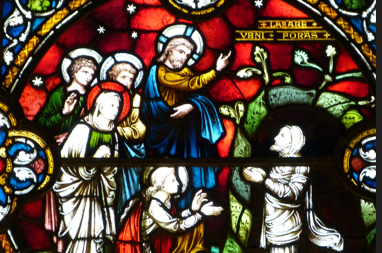
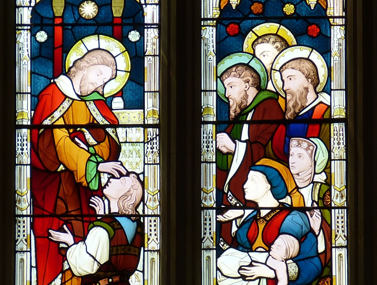
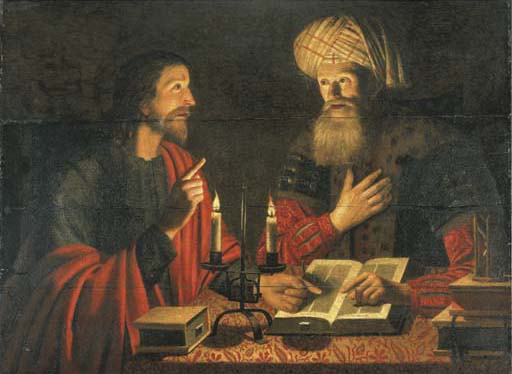
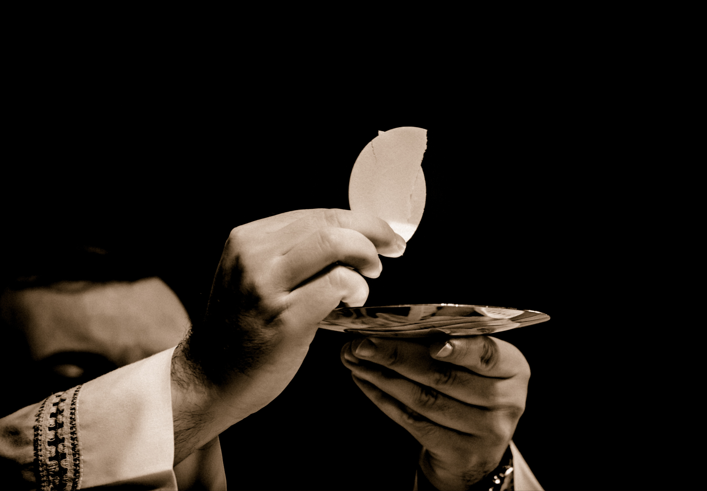
As important as Jesus’ teachings are in the Sermon on the Mount, Jesus’ death is “of first importance.” The Church breathes through these two “lungs” of Jesus: his teachings, and his death and resurrection. Our liturgy reflects these two “lungs:” the first part of our liturgy being the “Liturgy of the Word,” in which we hear the scriptures; the second part being the “Liturgy of the Eucharist, in which we continue (to quote the rite) “a perpetual memory of that his precious death and sacrifice, until his coming again.” I pray that we – in the words of the Collect – may not only “follow daily in the blessed steps of his most holy life,” following his example and teachings, but also might “receive thankfully the fruits of his redeeming work,” which he accomplished through his death on the cross.

Homily for the Seventeenth Sunday after Pentecost

















Homily for the Marriage of Joel Diamond and Eliza Cotter

Homily for the Feast of the Baptism of Our Lord