Training in Love
Homily for the Christmas I
December 24, 2025
Homily for the Christmas I
December 24, 2025
Homily for Wednesday, December 24, 2025
Christmas 1
Titus 2:11-14
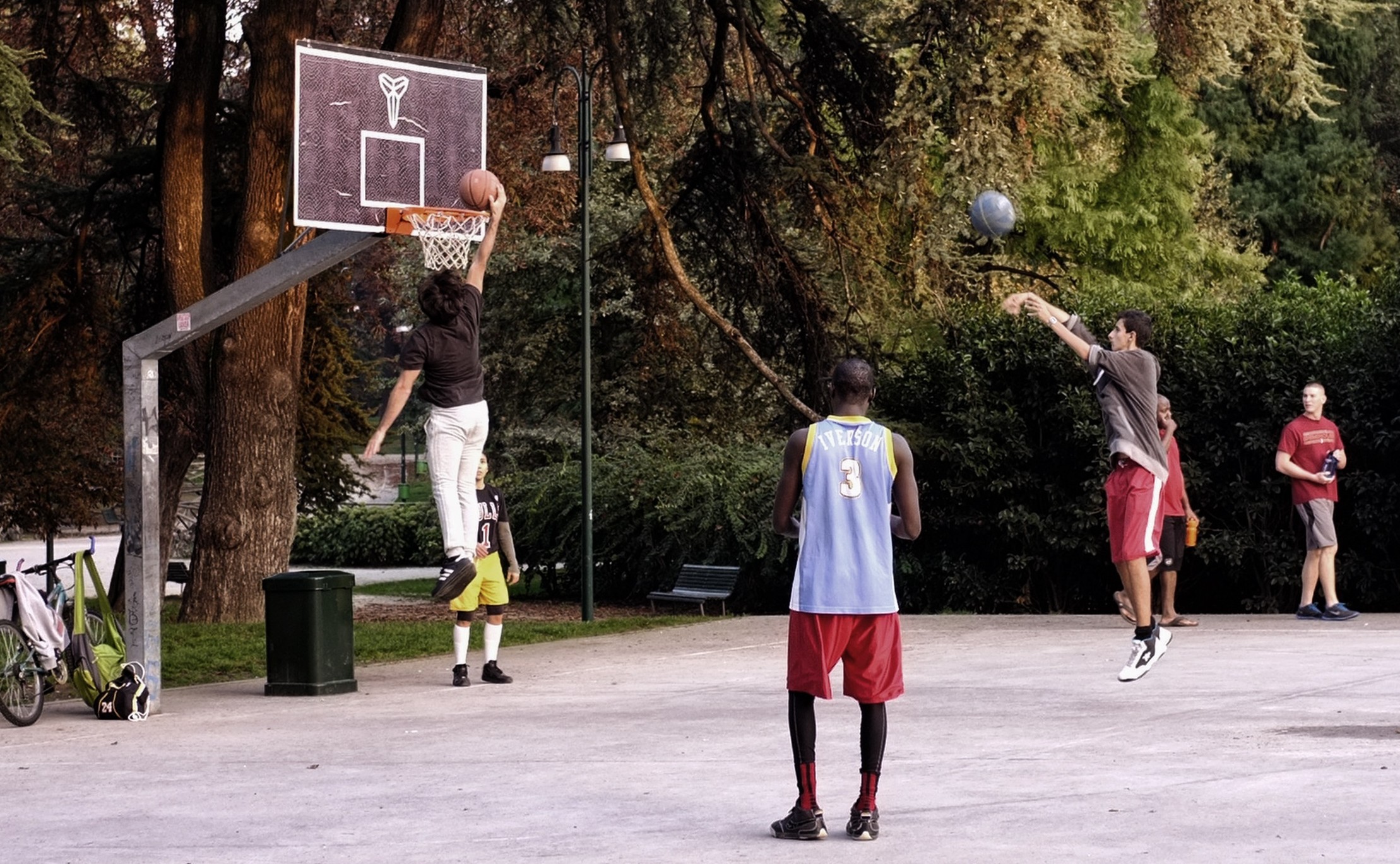
Last spring in a city park in Rochester, New York, I witnessed a tall, athletic-looking man of about fifty – he might have been a former collegiate or even professional player – patiently and quietly, almost without a word, working basketball drills with a boy of maybe twelve. First, they did the “firing squad” drill, taking shots along the arc of a circle going to the left; then they repeated the drill going back to the right. They did dribbling drills with cones, right-handed then left-handed. They practiced lay-ups, the boy driving past the man to the right, then to the left. They practiced jump stops, pivoting first right then left. They practiced bounce passes, right-handed and left-handed. They practiced a few fade-away jumpers before finally ending with a series of free throws. It was beautiful to watch – the man with his patient mentoring and the boy’s devoted attention and desire to learn.
What I witnessed in the park that spring day was not unlike what in ancient Greece was called “paideia,” which we might translate as “education,” or “training,” or “discipline.” In ancient Greece paideia referred to the process whereby young people were formed into dependable, upright citizens. Paideia assumes an ideal – in ancient Greece a citizen, but possibly also a basketball player or (as we will come to shortly) a Christian - and paideia was holistic, involving the formation of body, mind and spirit.
Paideia is important tonight for two reasons. First, paideia appears in this evening’s lesson from the Letter to Titus: “For the grace of God has appeared, training us – paideia-ing us –to renounce impiety and worldly passions, and in the present age to live lives that are self-controlled, upright and godly.” “The grace of God has appeared,” which is Jesus, and the reason he has appeared, writes the author, is to paideia us – to “form” or to “mentor”us – so that (to quote again from Titus) we might be “for himself a people of his own who are zealous for good deeds.”
The second reason paideia is important to us tonight is because, it being the Christmas season, in the coming days we are likely to spend time with family, and we may need to call upon the best paideia with which we were formed in order to help these visits go smoothly. And I’ll get back to those visits, but first, more scripture.
If we were to sum up the entirety of the scripture in three words, it would be, “I love you;” God’s saying to us, “I love you,” is in a nutshell the message of the scriptures. However, our “filters” have been distorted, and we tend to resist God’s message of love so that God has to find multiple ways to try to tell us, “I love you.” (Hence the Bible is over a thousand pages long.) Our “filters” have been distorted because to a large extent we have been “un-paideia-d”by the world – the powers of sin have tried to un-shape us, have tried to un-form us. Resisting God’s message of love is so commonplace that we could almost say it’s human nature to resist God. As we will hear in this coming Sunday’s Gospel lesson from John, “He came to what was his own, but his own people did not accept him” (John 1:11). We were made for God, yet we tend to resist God.
Getting back to those holiday visits… Similarly, if we could sum up the message we want to bring to those whom we might visit, or the message we want to have for those whom we might host, it likewise would be, “I love you.” Because we we recreated in God’s image, deep down within us, within all human beings, is the capacity and desire to love as do the persons of the Trinity, the Father, Son and Holy Spirit. Being made in God’s image, we all want to love and be loved. But… because our “filters” have been distorted – because to a large extent we have been“un-paideia-d” – when we try to communicate that love, something frequently gets lost. Indeed, instead of hearing, “I love you,” we often hear quite the opposite! We humans are so complex, so complicated, that frequently by our words and actions, instead of nurturing the loving relationships we want, we develop rather relationships marked by misunderstandings, judgments and assumptions – by resistance. And the love that deep-down we want eludes our grasp.
But fortunately, writes the author of the Letter to Titus, while Jesus was among us he “paideia-d”or trained us (in his words), “to renounce impiety and worldly passions, and in the present age to live lives that are self-controlled, upright and godly.” Or – to use more contemporary and perhaps more pertinent language – Jesus trained us so that we might better love those around us.
When Jesus was among us, he trained us in concrete, love-increasing practices such as: Forgive, “Not seven times, but I tell you,seventy-seven times” (Matt 18:22). Repent– “The time is fulfilled, and the kingdom of God has come near; repent,and believe in the good news” (Mark 1:15). To listen – “The blind receive their sight, the lame walk… the dead are raised… Let anyone with ears, listen!” (Matt 11:4-5, 15). To see – “The blind man said to Jesus, ‘Lord,let me see again.’ Jesus said to him,‘Receive your sight” (Luke 18:41-42). Tosay “Thank you” – After the leper saw that he was cleansed, he “turned back,praising God with a loud voice. He prostrated himself at Jesus’ feet and thanked him…” (Luke 17:15-16). When Jesus was among us, he mentored us – he paideia-d us – teaching us love-building practices such as how to forgive, repent,listen, see, and to say, “Thank you.”
But perhaps more important than what Jesus taught is the grace that Jesus gives – the Letter to Titus tells us that Jesus is “the grace of God” that has appeared. Why not this Christmas season ask Jesus for the grace of help with our relationships? “Jesus, help me better to listen.” Or, “Jesus, help me to forgive.” Or, “For the grace not to get ‘hooked’ when so-and-so says this or does that.” Or, if in the moment you can think of no better words, maybe just pray, “Jesus, help!” (Like, he’s going to say, “No”?) With God’s help, perhaps we might (in the words of the letter to Titus) “renounce impiety and worldly passions, and in the present age live lives that are self-controlled, upright and godly.” Or – to put it differently – perhaps with God’s grace, we will come to better express love for and receive love from those around us.
As we are hosting or visiting this Christmas season, I invite us to remember God’s message of “I love you” and to remember also that deep-down love is our message, too, both what we are trying to tell others and what they are trying to tell us. Because the powers of sin have distorted our“filters” – because the world has done much to “un-paideia” us – our message of love often is misconstrued. If it is misconstrued, maybe ask Jesus for help. For Jesus loves us; Jesus loves our family and friends. And Jesus invites all into the loving relationship that is between the persons of the Trinity, the Father, Son and Holy Spirit. One of the most difficult things for us human beings to do is to allow Jesus and his love to draw near, for we tend to resist God and God’s love. But the extent to which we are able to allow Jesus to love us is the extent to which we are able to allow others close and to find, in Jesus and in those around us, the love our hearts seek.

Homily for the Seventeenth Sunday after Pentecost


















Homily for the Marriage of Joel Diamond and Eliza Cotter

Homily for the Feast of the Baptism of Our Lord