A Glory That You Can Touch
Homily for the Second Sunday After the Epiphany
January 18, 2026

Homily for the Second Sunday After the Epiphany
January 18, 2026
Homily for Sunday, January 18, 2026
The Second Sunday After the Epiphany
John 1:29-42
Though our three-year lectionary cycle alternates between the Gospels of Matthew, Mark and Luke, always on the First Sunday after Christmas and always on the Second Sunday after the Epiphany (today) we hear instead from the Gospel of John. The Gospel lesson for the First Sunday after Christmas was John’s opening Prologue, the famous reading that begins: “In the beginning was the Word, and the Word was with God, and the Word was God”(John 1:1). And the Gospel lesson for today is John’s account of Jesus’ encounter with the first disciples.
One would think that the Gospels of Matthew, Mark and Luke would be sufficient, in the words of the Collect (BCP, p 214) to “manifest your only son to the peoples of the earth.” Why then would the lectionary insist on these interpolations from John? In a word: because John helps us better to see Jesus’ “glory.”
I want to return to Jesus and“glory,” but first for some context I want to look to a book influential to John, Deuteronomy. In Deuteronomy chapter 18, Moses tells the people: “The Lord your God will raise up for you a prophet like me from among your own people; you shall heed such a prophet” (Deut 18:15). In case the people, when they heard the word “prophet,” were thinking along the lines of a “seer” who could foretell the future (such as there might be in one of their neighboring countries) Deuteronomy sets them straight:
No one shall be found among you… who practices divination, or is a soothsayer, or an augur, or a sorcerer, or one who casts spells, or who consults ghosts and spirits, or who seeks oracles from the dead. Whoever does these things is abhorrent to the Lord. (Deut 18:10-12)
Should readers of Deuteronomy by chapter 18 still not be clear about what Moses meant by “prophet,” the book’s closing lines are definitive: “Never since has there arisen a prophet in Israel like Moses, whom the Lord knew face to face” (34:10). Moses is different from the “prophets” of other nations, says Deuteronomy, because Moses spoke to the Lord “face to face,as one speaks to a friend” (Ex 34:11). Because a cloud obscured the Lord’s face when they spoke, Moses asked (in Exodus chapter33) to see God’s face. But God answered,“You cannot see my face, for no one shall see me and live,” and God allowed Moses to see only his backside as God passed by (33:17,20, 22-23).
Given Moses’ prophecy in Deuteronomy about the prophet whom God will raise up, and given Moses’ speaking to the Lord “face to face” but only seeing his backside, the lines from John’s opening Prologue take on new meaning: “The Word became flesh and dwelt among us,” John writes. Jesus, claims John, is the prophet whom Moses foretold. And Jesus is a more complete prophet, says John, for if Moses spoke to God face to face but in a cloud, and if Moses saw only the backside of God, Jesus (to quote John) is the one who is “close to the Father’s heart,” and it is Jesus who “makes God known” (Jn 1:18). Jesus is so united with God, says John, that if one has seen Jesus, one has seen the Father (Jn14:9).
What the lectionary’s passages from John, then, add to our understanding of Jesus’ Epiphany, or manifestation,is an invitation into what John calls Jesus’ “glory:” a face to face relationship with the Father himself. “The Word became flesh and dwelt among us,” John wrote, “and we have seen his glory, the glory as of a Father’s only Son, full of grace and truth” (Jn 1:14).
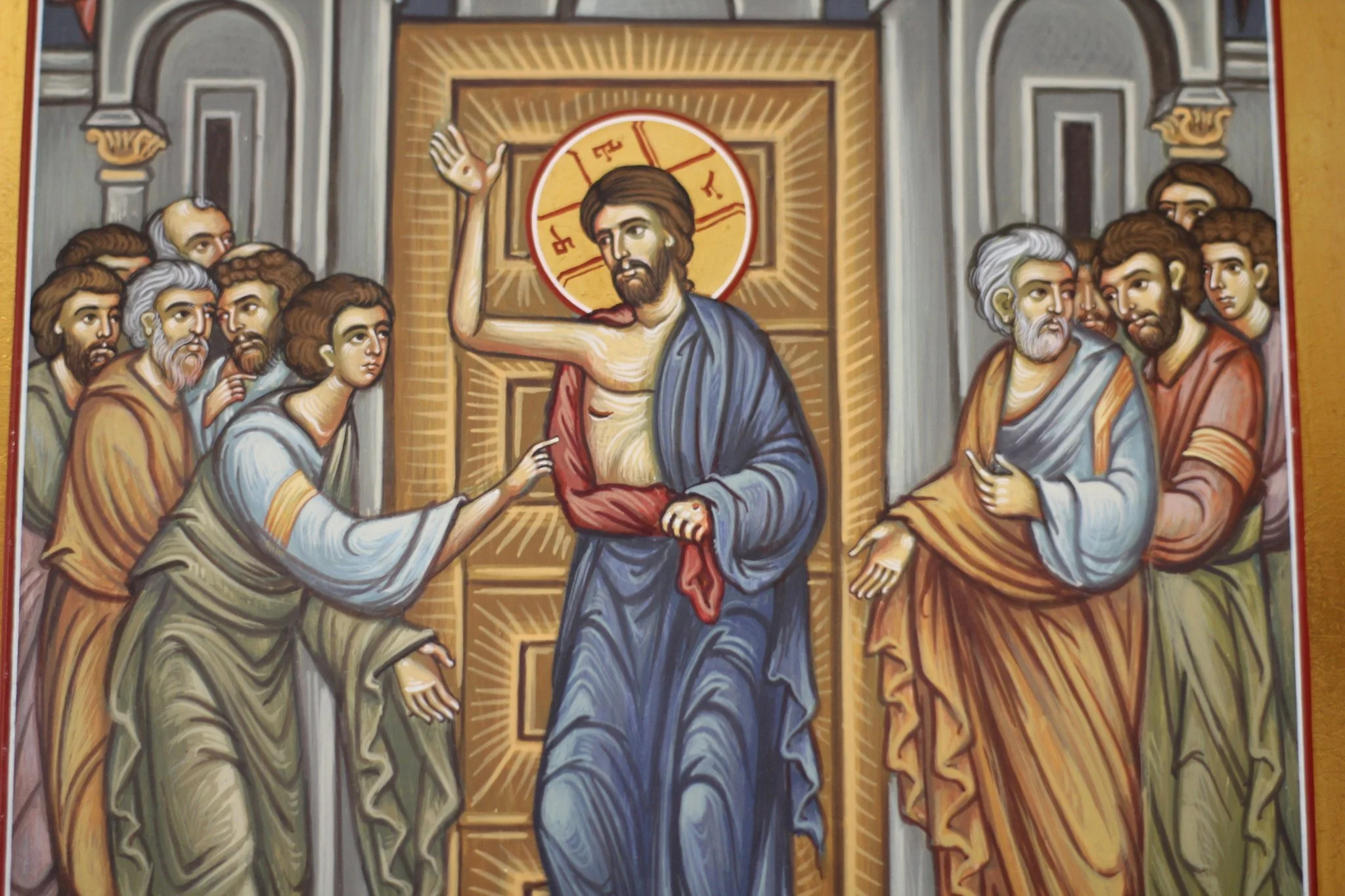
Five things about “glory” in John. First, the “glory” into which John invites us is not far off but near and can even be touched. “The Word became flesh and dwelt among us” (Jn 1:14), John writes; and this Word we have “looked at and touched with our hands,” he says (1 John 1:1). Recall,too, Jesus’ invitation to Thomas after the resurrection to touch him, to “Put your finger here and see my hands” (John 20:27). Second, the “glory” into which John invites us is not at all clouded but clear. If in the Synoptics’ story of the Transfiguration the disciples were overshadowed by a cloud (Matt 17:5), in John, people are able to see Jesus clearly: “We have seen his glory,” John writes(Jn 1:14), and with a vision that has not been obscured even partially, for“God is light,” John says, “and in him there is no darkness at all” (1 John1:5). Third, the “glory” into which John invites us does not cause fear but rather attracts. If in Luke the angels must say to the shepherds, “Do not be afraid” (Luke 2:10) and if at the Transfiguration, “the disciples... fell to the ground and were overcome by fear” (Matt 17:6), in this morning’s reading from John, Jesus does not need to call the disciples, but they come of their own accord: “The two disciples heard him say this, and they followed Jesus.” Jesus’ glory is so attractive that even at his crucifixion, he “will draw all people to himself” (John 12:32). Fourth, if in the Synoptics Jesus’ glory is fleeting, lasting only briefly, in John, Jesus’ glory remains such that we can abide with him. “Rabbi… where are you staying?” the disciples ask in today’s lesson. “They came and saw where he was staying, and they remained with him that day.” Lastly, if in the Synoptics Jesus’“glory” tends to be associated with beginnings – the angels appeared at Jesus’ birth, and the voice from heaven spoke at the beginning of his ministry – in John, Jesus’ “glory” also encompasses death. In John’s account of the Last Supper, immediately after Judas had gone out to betray him, Jesus said to his disciples, “Now the Son of Man has been glorified, and God has been glorified in him” (John 13:31). For John, Jesus’ “glory” is most fully visible at his crucifixion.
Perhaps aware of how complex his Gospel might be to understand, in his latter chapters John introduces a helpful character who sums up the intimate, face-to-face relationship into which Jesus invites us.
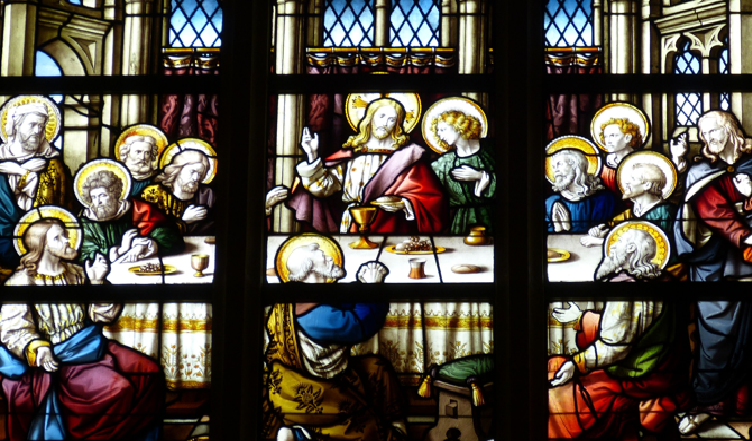
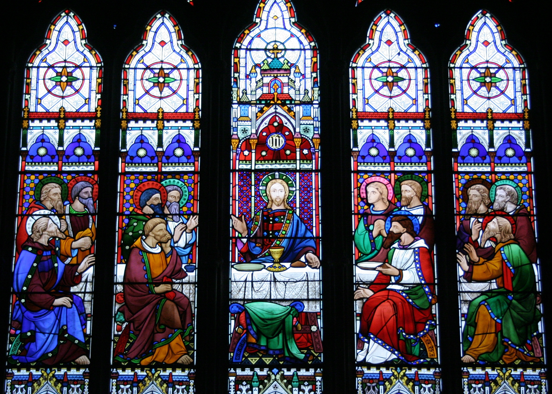
One of his disciples – the one whom Jesus loved – was reclining close to his heart. Simon Peter therefore motioned to him to ask Jesus of whom he was speaking. So while reclining next to Jesus, he asked him, “Lord, who is it?”
At the Last Supper the Beloved Disciple reclined close to Jesus’ heart. At the crucifixion Jesus entrusted his mother to him, and he took her into his own home (19:26-27). If we would better understand what the lectionary hopes for us see in these passages from John, perhaps we might look to the Beloved Disciple, who – similar to Moses with God but even more so like Jesus with the Father – had an intimate, face-to-face relationship with Jesus, “the Son of Man.”
Your Epiphany “homework,” should you choose to accept it, is to recall Origen’s words that, if we would understand John’s Gospel, we must with the Beloved Disciple recline close to Jesus’ heart, and also with him take Jesus’ mother into our own home. Why not this week take time to imagine these two face-to-face relationships, first reclining close to Jesus’ heart, and then taking Jesus’ mother into your own home? I trust that the “glory” that the Spirit might give us in these meditations will be not far but near. I trust that this “glory” will not be “cloudy” but “clear;” that it will not cause fear but attract; that it will not be fleeting but abiding; and that this “glory” will not only be for us a beginning but will accompany us, as will Jesus, to the end.






Homily for the Seventeenth Sunday after Pentecost
























Homily for the Marriage of Joel Diamond and Eliza Cotter
Homily for the Feast of the Baptism of Our Lord