Accepting Our Broken Bodies
Homily for Ash Wednesday
February 18, 2026
Homily for Ash Wednesday
February 18, 2026
Homily for February 18, 2026
Ash Wednesday
Preached at St. John's, Newtonville
Toward the end of Toni Morrison’s Beloved, Paul D., formerly enslaved, says about his lady friend, the so-called “Thirty Mile Woman” (because every Sunday Paul D. used to walk thirty miles to see her) [Paul D. says about his lady friend]: “She gather me, man. The pieces I am, she gather them and give them back to me in all the right order.”
We’ll come back to Paul D.and his gathered pieces, but first: Gregor, my Friday morning yoga teacher. In a recent class Gregor said:
The mind is good at fixing things – it’s amazing the things our minds can fix! The mind is so good at fixing things that it even tries to fix the body. “My body should work like this,” we tell ourselves; or, “My body ought to look like that.” But as good as it is at fixing things,the mind cannot fix the body; indeed, when it tries, it tends to make things worse. The healthiest thing we can do for our bodies [said Gregor] is not to try to fix but to accept them. When our bodies know we accept them, we create space for change to happen.
Gregor’s words are pertinent as we begin Lent because – as we know, and as the liturgy in a moment will tell us– Lent is a season of “self-examination and repentance,” of “prayer, fasting,and self-denial,” of “reading and meditating on God’s holy Word.” And it is easy to regard the season of Lent as an opportunity to “fix” ourselves, such as: “This is how I should live,” or, “This is how I’m supposed to be,” or, “Here is how I much I really should weigh.” But, to cite Gregor, as good as we are at fixing things, we are not good at “fixing” ourselves. Indeed, when we try to fix ourselves, it tends to make things worse.
I wonder, then – taking a cue from Gregor – as we begin Lent and might be taking on a Lenten discipline, if instead of regarding Lent as a time to “fix” ourselves (which we never can do), we might approach Lent rather as an opportunity to accept ourselves (which, with God’s help, we can do). “Can I accept who I am with my shortcomings, faults and failures?” “Can I accept myself even though (at least in my eyes) I really messed up?” “Can I accept the shame and guilt I might feel because of something I said or did?” Part of the “self-examination” to which Lent invites us is an awareness of how we are internally in regards to our brokenness, or (to use a theological word) how we are in regards to our sin. Are we trying to “fix” ourselves? Or might we rather accept ourselves, that we are human, that of course we will sin – have sinned – and that we stand in need of God and God’s forgiveness? The extent to which we are able to accept ourselves, and to accept our need for God and God’s forgiveness, is the extent to which space can be opened for change to happen.
That Friday morning Gregor said something else helpful for us as we begin Lent: “Contrary to what we might think,” he said:
Yoga is not about the poses. Sure, when we practice yoga we hold our bodies in a certain way, and we give these certain ways names like “Warrior 2” or “Half-moon.” But forget about the poses; I don’t care about the poses! [he said]. What I care about is what is going on inside of you when you do the poses. The point of yoga is not the poses, but rather who we are when we are in the poses.
Similarly, the Lenten disciplines we may take on are not about the disciplines. We don’t fast for the sake of fasting or self-deny for the sake of self-denying. To paraphrase Gregor, “Forget about the disciplines!” What is important is what is going on inside when we fast, or what is going on inside of us when we practice self-denial, or what is happening inside when we read and meditate on God’s holy Word. Are our disciplines helping to open further our hearts to Jesus, to accept his love and forgiveness? For it is he alone who has the power to heal and to save.
Our liturgy tonight gives us a jump start on coming to this place of acceptance. In just a few moments, ashes will be imposed on our foreheads – “Remember that you are dust, and to dust you shall return” –and we will walk forth with a tangible reminder on our foreheads of what ultimately is our body. We cannot fix it– we are dust, and to dust we shall return. We cannot fix it; can we accept it?
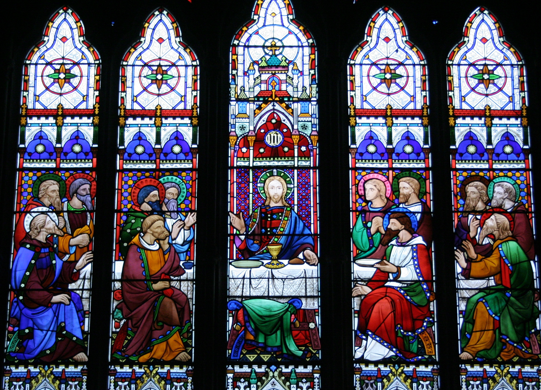
Our liturgy invites us, too,to come to a place of greater awareness of what is going on inside as we begin our journey through Lent. “Take,eat: This is my body which is given for you.” “Drink this, all of you: This is my blood… which is shed for you.” At every Eucharist, we practice awareness of what is within us, of Jesus’ body and blood being taken into our body and blood. In this broken body and shed blood God will over time gather up – not fix but gather up – “the pieces we are.” In the Eucharist, Jesus “gathers our pieces and gives them back to us in all the right order.”
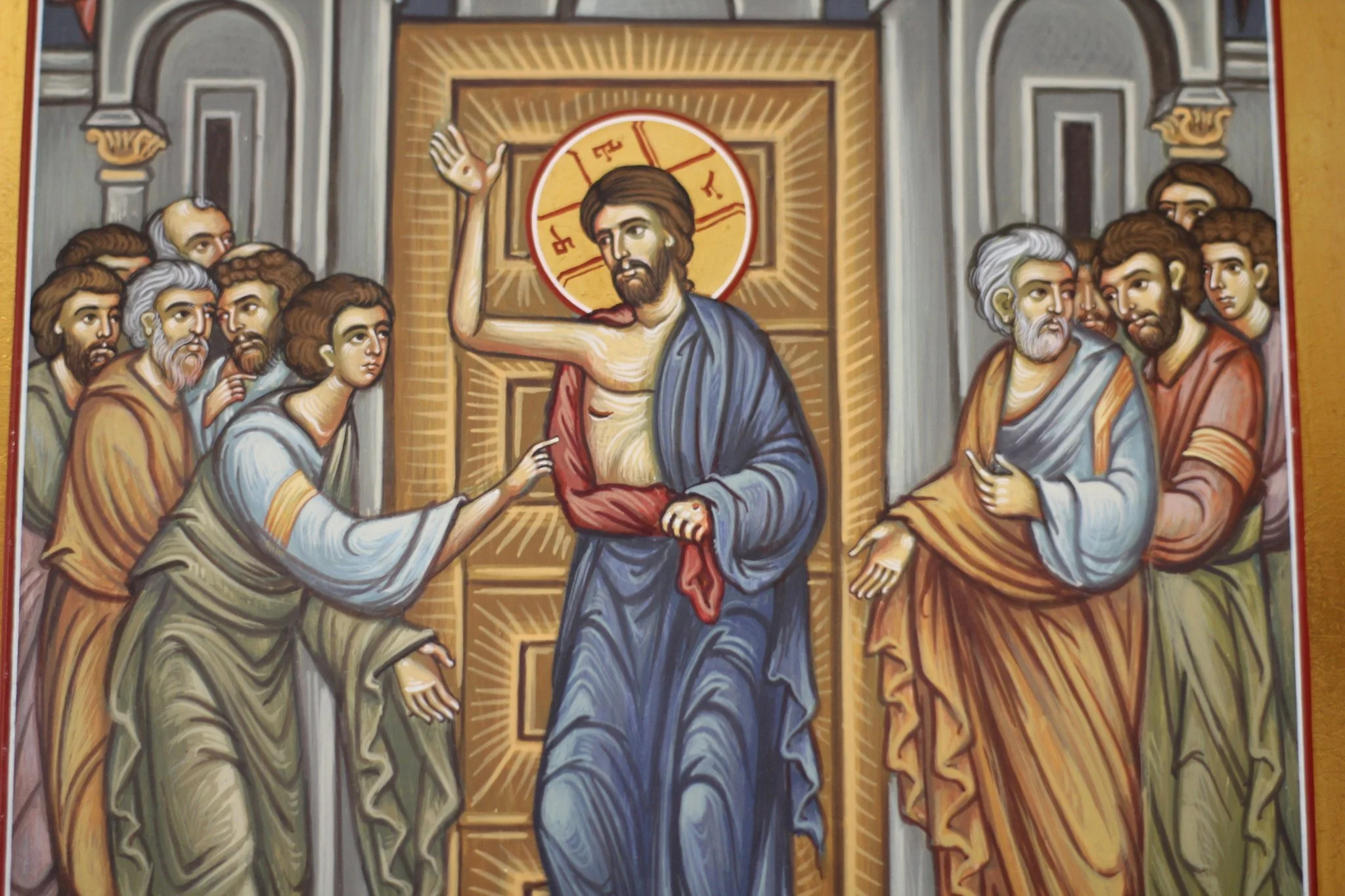
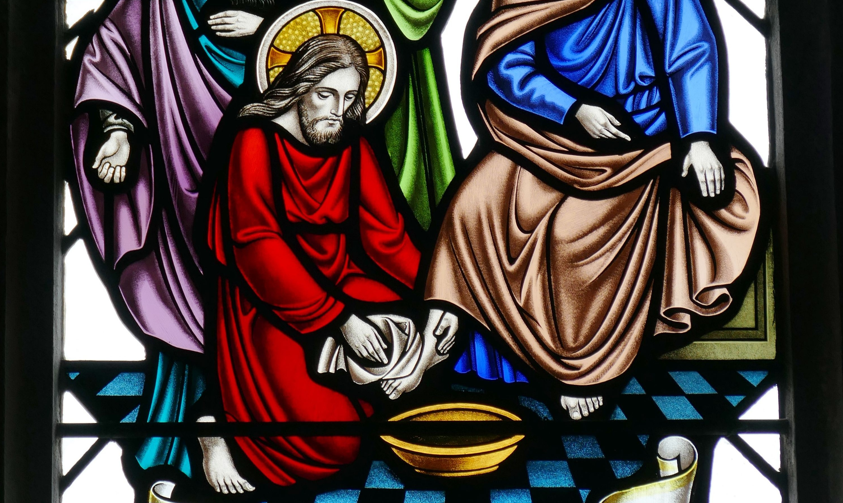
We cannot “fix” ourselves; I urge us to not even try. But can accept ourselves? Jesus accepts us. And not only does Jesus accept us, but Jesus loves us. As we allow him, he can work in us not “fixing” but healing, gathering up all our pieces and putting them back together again in the order God knows is best.



Homily for the Seventeenth Sunday after Pentecost




















Homily for the Marriage of Joel Diamond and Eliza Cotter

Homily for the Feast of the Baptism of Our Lord