The Great Task of Discipleship
Homily for the Last Sunday After the Epiphany
February 15, 2026

Homily for the Last Sunday After the Epiphany
February 15, 2026
Homily for February 15, 2026
The Last Sunday After the Epiphany
Exodus 24:12-18
Moses entered the cloud and went up on the mountain.
Moses was on the mountain for forty days and forty nights.
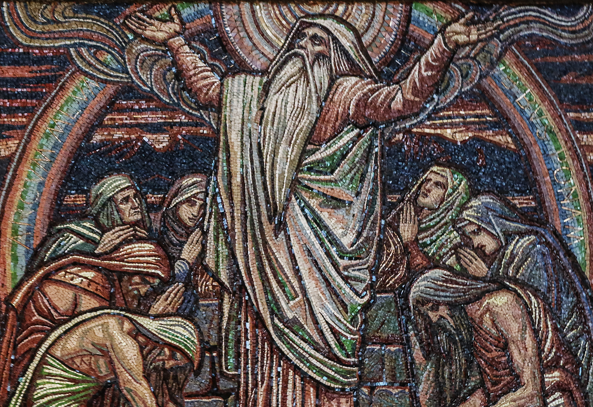
In the story of Noah in Genesis chapter 7, it rained for forty days and forty nights (Gen 7:4). In this morning’s reading from Exodus chapter24, “Moses was on the mountain for forty days and forty nights.” Joshua chapter 5 tells how “the Israelites traveled forty years in the wilderness” (Josh 5:6). In Exodus chapter 16, “The Israelites ate manna forty years” in the wilderness (Ex. 16:35). In Numbers chapter 13, “At the end of forty days they returned from spying out the land” (Num 13:25). In 1 Kings chapter 19, the prophet Elijah ate bread and drank water and “went in the strength of that food forty days and forty nights” (I Kings 19:8). In the book of Jonah, the city of Nineveh was given forty days to repent (Jonah 3:4). In Matthew chapter 4, Jesus “fasted forty days and forty nights.” And in the opening chapter of Acts, Jesus, “presented himself alive to them by many convincing proofs, appearing to them during forty days and speaking about the kingdom of God” (Acts 1:3).
Taken together, these stories suggest that in Biblical language, “forty days” signifies a time not only of transition but of transformation as persons or people change from one great task to another. In the ark, for example, Noah and his family rode out the destruction of one earth and helped its re-birth into another. In this morning’s reading from Exodus, Moses transformed from being the “expeditionary leader” of a group of formerly enslaved people fleeing Egypt, to being the prophet who raised up a nation pledging allegiance to the Ten Commandments. Or in I Kings, Elijah over “forty days” transformed from one who hid in fear from King Ahab and Queen Jezebel to one who boldly anointed a new king in their place. In the Bible, “forty days” signifies not only transition but transformation as persons or people change from one great task to another.
Moses’ “forty days and forty nights” in Exodus are important for us today for at least two reasons. First, Moses’ “forty days” on the mountain in Exodus inform our understanding of Jesus’ Transfiguration on the mountain in Matthew. Just as Moses was on the mountain and spoke with God, and as his face shone when he came down (Ex 34:29-34),so was Jesus on the mountain when a voice from the cloud spoke to him, and “his face shone like the sun.” And just as during the forty days on the mountain Moses changed from being the expeditionary leader of formerly enslaved people to being the prophetic leader of a new nation, so does Jesus on the mountain transition from his ministry of teaching and preaching in Galilee to one who now sets his gaze towards Jerusalem and his impending crucfixion. The story of the Transfiguration is in a way a “hinge” in the Gospels, the “peak”from which we can look back at Jesus’ earlier ministry in Galilee, and from which we look ahead to his great task of redemption on the cross.
Moses’ “forty days and forty nights” in Exodus are important this morning for us also because we are about to begin the “forty days” of Lent. Just as for the people of the Bible “forty days” signified a time not merely of transition but of transformation, a change from one great task to another, so is the intent of Lent not merely transition but transformation as we remember and renew our own change from one “great task” to another.
This change from one “great task” to another is spelled out in “The Invitation to the Observance of a Holy Lent,” which we will be read to us at the Ash Wednesday liturgy this week:
Dear People of God, the first Christians observed with great devotion the days of our Lord’s passion and resurrection, and it became the custom of the Church to prepare for them by a season of penitence and fasting. This season of Lent provided a time in which converts to the faith were prepared for Holy Baptism. It was also a time when those who, because of notorious sins, had been separated from the body of the faithful were reconciled by penitence and forgiveness, and restored to the fellowship of the Church.
These “great tasks” of preparing for Baptism and making repentance not only bore upon those preparing for Baptism or making repentance, but they bore also upon the whole body. “Thereby,” continues the Invitation:
The whole congregation was put in mind of the message of pardon and absolution set forth in the Gospel of our Savior, and of the need which all Christians continually have to renew their repentance and faith.
These forty days that begin Wednesday remind us of the “great task” into which we have been or might someday be baptized; and these forty days are an opportunity to once again root ourselves in Christ and his Gospel, and to apply ourselves with renewed strength to our task.
Should you wonder what is our task, recall the vows Frank made in December at his Baptism. They include three “renunciations,” and three so-called “adherences. The “renunciations:”
· “Do you renounce Satan and all the spiritual forces of wickedness that rebel against God?” “I renounce them,” Frank said.
· “Do you renounce the evil powers of this world which corrupt and destroy the creatures of God?’’ “I renounce them.”
· “Do you renounce all sinful desires that draw you from the love of God?” “I renounce them?”
And then the so-called“adherences:”
· “Do you turn to Jesus Christ and accept him as your Savior?” “I do.”
· “Do you put your whole trust in his grace and love?” “I do.”
· “Do you promise to follow and obey him as your Lord?” “I do.”
When we were baptized, we did not merely transition but were transformed, and we changed from the “task” of walking in the ways of the world to the “great task” following Jesus and walking in his ways as his disciple.
As we stand this morning with Moses on the mountain, and as we stand with Jesus on the mountain, and as we hear in the scriptures his word and experience in the sacraments a pledge of his redemption, I pray for the grace to regard the coming forty days as an opportunity, as an invitation from God himself, to allow ourselves to be transformed. That by his grace, we might re-engage in a new and deeper and ever more life-giving way, our discipleship in following Jesus Christ.


Homily for the Seventeenth Sunday after Pentecost

















Homily for the Marriage of Joel Diamond and Eliza Cotter

Homily for the Feast of the Baptism of Our Lord