Mistaken Identity
Homily for Easter Day
April 5, 2026

Homily for Easter Day
April 5, 2026
Homily for April 5, 2026
Easter Day
John 20:1-18
Literature abounds with examples of mistaken identity. For example, in Shakespeare’s Twelfth Night twins Viola and Sebastian are mistaken for each other, causing romantic confusion in Olivia’s and Orsino’s courts. In Mark Twain’s The Prince and the Pauper, the beggar boy Tom Canty trades places with Edward Tudor, who is of royal birth. In Edmond Rostand’s Cyrano deBergerac, Christian is mistaken by Roxane as the author of romantic letters actually written by Cyrano. Or in Dickens’ A Tale of Two Cities, Sydney Carton’s close resemblance to Charles Darnay enables Carton to help Darnay escape two false convictions. Cases of mistaken identity create humor as we watch characters navigate under false assumptions; cases of mistaken identity create unexpected plot twists that help drive narrative tension; and they can allow characters (and thus us the readers) to explore themes of identity and self-discovery.
Mistaken identity is a theme in St. John’s Gospel. Mistaken identity begins already in chapter 1 when the religious authorities mistake John the Baptist’s identity: “I am not the Messiah,” he said. “What then? Are you Elijah,” they ask, and, “Are you the prophet?” (1:19-21). Consider, too, the story of the woman at the well in John chapter 4; the woman has no idea the man with whom she is speaking is Jesus or what he means when he offers “living water.” “Sir,” she says, “you have no bucket, and the well is deep. Where do you get that living water?” (4:11). Or recall the crowd in chapter 7. “While some were saying, ‘He is a good man,’others were saying, ‘No, he is deceiving the crowd.” Still others said, “This is really the prophet,” while others said, no, “This is the Messiah” (7:12, 40-41).
John’s theme of mistaken identity culminates in today’s story of Mary Magdalene at the empty tomb. John sets the scene by Mary’s early arrival “while it was still dark” and with her discovery that “the stone had been removed from the tomb.” John builds tension first with Mary running “to Simon Peter and the other disciple” and then with those disciples running to the tomb. He sets up Mary’s solo encounter with Jesus by having the disciples “not yet understand the scriptures” so that they “return to their homes.” And as if to foreshadow her mistaking Jesus’ identity, Mary seems not to recognize the two angels: “Woman, why are you weeping?” they ask. “They have taken away my Lord,” she says. But then – and here is the culmination of John’s theme of mistaken identity – “When she had said this…”
[Mary] turned around and saw Jesus standing there, but she did not know that it was Jesus… Supposing him to be the gardener, she said to him, “Sir, if you have carried him away, tell me where you have laid him, and I will take him away.”
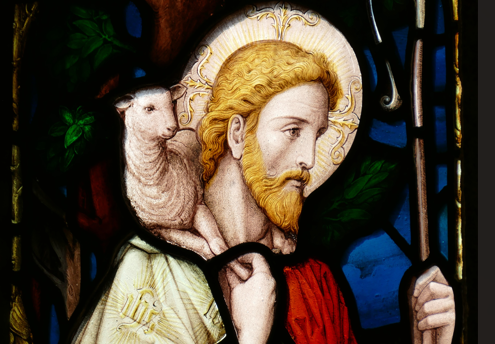
Before we get to the moment of recognition – the “big reveal,” as it were – toward which this passage and arguably the entire Gospel builds, a note on Jesus’ use of names in John’s Gospel. Remember that for John, Jesus is the Good Shepherd who “calls his own sheep by name and leads them out… and the sheep follow… because they know his voice” (10:3-4). In John, Jesus calls exactly four people by name.
· In Chapter1: “’You are Simon son of John,’ Jesus said to Peter. ‘You are to be called Cephas’ (which is translated Peter)” (1:42).
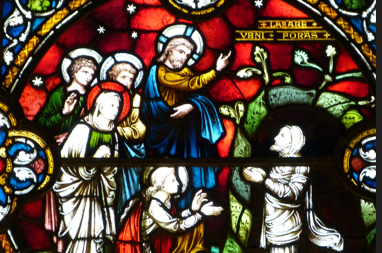
· In Chapter11: “Jesus cried with a loud voice, ’Lazarus, come out!’ The dead man came out, his hands and feet bound with strips of cloth.” (11:43-44)
· In Chapter14: “’Lord, show us the Father, and we will be satisfied.’ Jesus said, ’Have I been with you all this time, Philip, and still you do not know me? Whoever has seen me has seen the Father.”
· And in today’s lesson in chapter 20 is the moment of recognition, arguably the climax of the entire Gospel… “Jesus said…, ‘Mary!’ She turned and said to him in Hebrew,‘Rabbouni!’ (which means Teacher).”
These four instances of Jesus calling someone by name outline a path of discipleship. 1) Calling – “You are to be called Cephas (which is translated Peter).” 2) Resurrection– “Lazarus, come out!” 3) An invitation into Jesus’ relationship with the Father: “Philip… Whoever has seen me has seen the Father.” And 4) hearing Jesus call us by name: “Jesus said, ‘Mary!’ She turned and said to him in Hebrew, ‘Rabbouni!’ (which means Teacher).”
Though it might seem that resurrection – Jesus raising us from the dead – would be the culmination of discipleship, by the order in which Jesus calls people by name, could it be that for John even more important than “resurrection” is sharing in Jesus’ relationship with the Father – “Philip… Whoever has seen me has seen the Father”? And could it be that for John more important still is (like Mary) to hear Jesus call us by name? For John Mary Magdalene – who 1) showed up to seek Jesus, and who 2) persevered in waiting at the tomb for him – [for John,Mary Magdalene] even more than Peter, even more than the Beloved Disciple,[Mary Magdalene] is the disciple par excellence. Mary 1) showed up, she 2) persevered in waiting. So that when Jesus called her by name, as one his sheep, she recognized his voice.
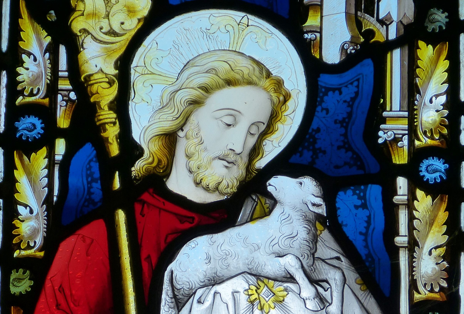
Though we may be mistaken about Jesus’ identity, Jesus is never mistaken about ours. He knows each of his sheep by name: “I am the Good Shepherd,” he says:
I know my own, and my own know me, just as the Father knows me, and I know the Father. And I lay down my life for the sheep. (10:14-15)
There is much in our world that seeks to confuse us and to draw us away from our Shepherd – every day we encounter darkness that would keep us from seeing him; every day we are surround by “noise”that would drown out his call. To hear Jesus call us by name is at once a gift and something that can be learned: a gift – as Jesus said, “No one can come tome unless it is granted by the Father” (John 6:65) – and something that can be learned – Mary learned the importance of 1) showing up, and of 2)persevering.
I wonder if this Easter season we might practice the same: 1) showing up, and 2) persevering. For though we may sometimes be mistaken about Jesus’ identity, our Shepherd is never mistaken about ours. And he is calling us – each and every one of us – by name, hoping that we like Mary will turn and recognize him and know him who is our true Teacher. So that we, too, can experience the deep joy and peace the comes from knowing the risen Lord.


Homily for the Seventeenth Sunday after Pentecost

















Homily for the Marriage of Joel Diamond and Eliza Cotter

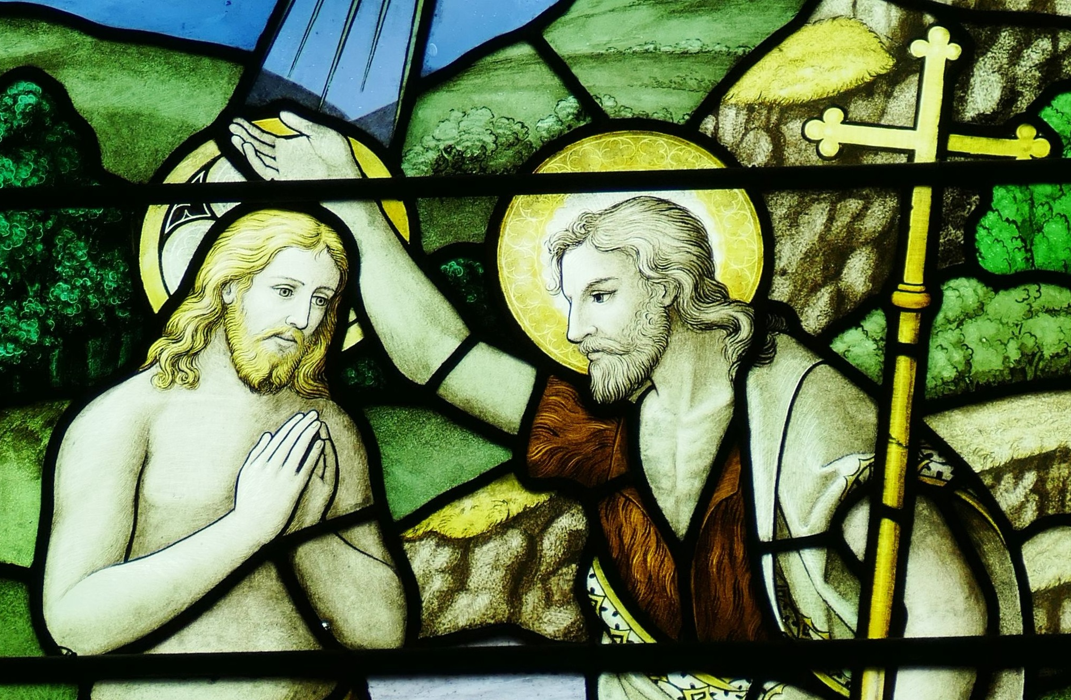
Homily for the Feast of the Baptism of Our Lord