Raising Up Humanity
Homily for Asension Day
May 14, 2026

Homily for Asension Day
May 14, 2026
Homily for May 14, 2026
Ascension Day
Acts 1:1-11
While the feast of the Ascension doesn’t trip the lights fantastic like our celebrations of the Feast of the Incarnation at Christmas nor the Feast of the Resurrection at Easter, the history of the Feast of the Ascension wasn’t always this…how shall I say it…boring? However, looking back at the Feast of the Ascension as practiced by our forebearers in the faith, particularly those in the Western European and British traditions, the Middle Ages we see some deeply theatrical interpretations of the feast we gather to celebrate this evening.
Take for instance the Bavarian tradition quite common in Europe of Die Heiliggeistlöcher or Holy Ghost holes. These portholes built into the ceilings of churches and cathedrals were the centerpieces of Ascension Day services as statues of the Resurrected Christ would be hoisted up through Die Heiliggeistlöcher as parishioners watched him ascend. As the statue finished its ascension into the attic space above, sometimes rose petals or even wafers were dropped back through them to signify the gifts given to the Church at Christ’s departure from earth. At Pentecost these same Holy Ghost holes saw flaming flax dropped into the church or cathedral as a sign of the Holy Spirit’s descent, but for obvious reasons this practice was abandoned.
Then there’s the strange architecture of the Shrine of Our Lady of Walsingham in Norfolk, England. In their Ascension Chapel one need only look up to see a pair of plaster feet and a golden robe set in the roof line, a literal signifier of the ascending Christ, who apparently got stuck on his way out. Both of these literal ascension practices range from quaint, to comical, to outright dangerous. Since then we’ve been at a bit of a loss to generate the joy and pageantry for this day that it so rightly deserves.
What then are we to do with the Feast of the Ascension? What is the Ascension, and why does it matter so much in the life of the Church? For this, I think we need to consider keenly two fundamental theological impulses of the Trinitarian Christianity to which we cleave. The first is something we claim a great deal as Episcopalians, but the latter finishes the former. In other words, one without the other makes little sense in the grand scheme of the divine love we claim in the person and work of Jesus Christ. I’m speaking of the Incarnation and what Maximus the Confessor called theosis. If the Incarnation is the unification of the Word and human flesh, theosis is the joining of human nature to the Divine Trinity.
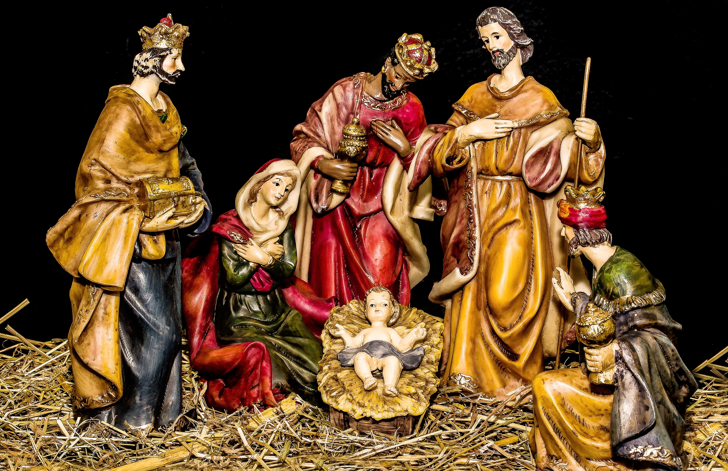
When we talk about Incarnation in the Church, we are making a claim that goes back to St. Paul’s words in the second chapter of Philippians. This is the claim of Christmas. Christ entered into the human condition fully and completely. Yes he retained his divinity, but in his descent among us, in his kenosis, he emptied himself to take on the same flesh as ours with its weakness, frailty,and potential fallibility. In the Incarnation, God became a human being.
But the Ascension completes the journey and work of Christ begun in the Incarnation. Jesus doesn’t shed his humanity. Jesus doesn’t qualify which parts of humanity he brings with him. Instead, in the Ascension, the whole of human nature becomes knit inseparably within the Word made flesh knits itself into the Divine Trinity.
Maximus the Confessor compares it to an iron bar plunged into the fire. Human nature, the iron bar in this analogy, is plunged into the Divine Loving Fire of our Triune God. It is not God, but it does glow with the glory and majesty of that Fire. The iron takes on the properties of the fire itself, never ceases to be iron, but is now forever participant in the life of the fire. As Incarnation is Christ coming among us in all of his humanity, so in his Ascension that same humanity is brought forever into the heart of God. Maximus calls this twin of Incarnation; theosis.
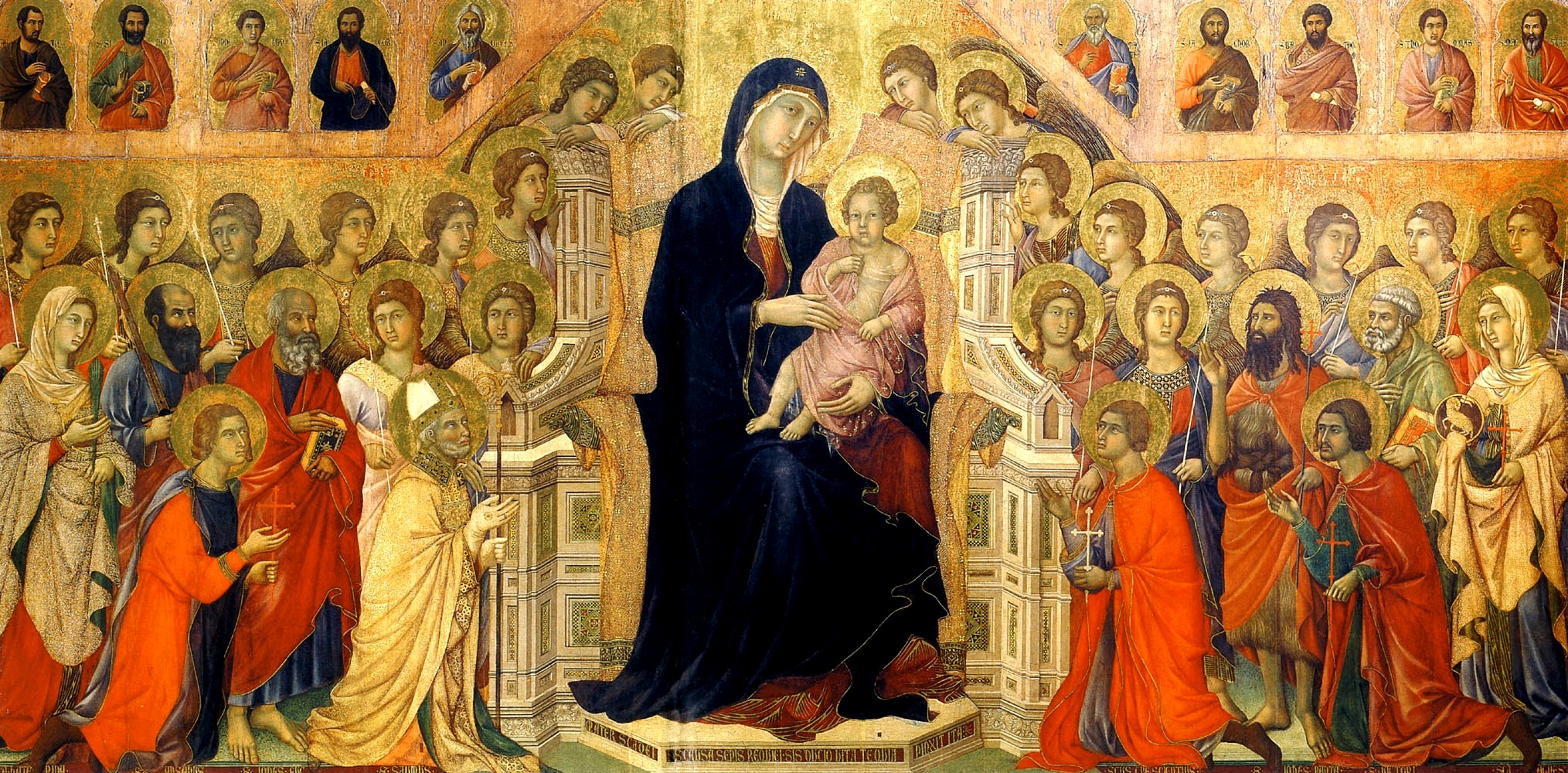
Now I can’t fix all of the problems of Charles Gore and the roughly spun theologies of Incarnation far too prevalent in the Episcopal Church in one singular homiletical outpouring, but incarnation without theosis, Christmas and Easter without Ascension, are small beer. Many gods have taken human form, and some have even come back from the dead, but the mystery of our faith perhaps ought to be: Christ has died, Christ has risen, Christ has raised, and Christ will come again. Humanity has been raised by Christ’s Ascension into the very life of God, and God has chosen to welcome humanity into God’s own being.
The work of the Church, then, is worship. Not merely what happens at this altar,though never less than that. Our worship begins here in church because here we behold the humanity of Jesus lifted into the life of God. But worship does not end at the dismissal. It continues wherever broken humanity waits to be seen, fed, clothed, defended, forgiven, and loved.
When we serve the wounded and weary world around us, we are not simply doing good.We are not merely doing justice. We are honoring the holy humanity that Christ has carried into the very heart of God. We are reverencing, in every frail and fractured human life, the flesh that the Word assumed, redeemed, raised, and enthroned.
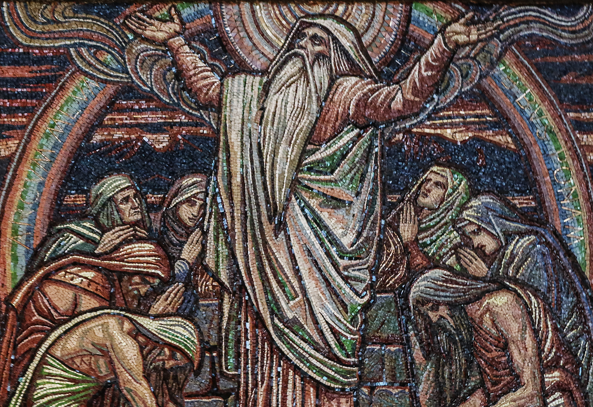
This is the glory of the Ascension: humanity is not discarded by God. Humanity is glorified in God. And so we worship the ascended Christ not by staring up into the heavens, nor by peering at plaster feet in church roofs wondering where he has gone, but by turning toward the world he has claimed, the humanity he has hallowed, and the broken bodies in whom he still waits to be served. Perhaps this feast has always deserved more joy than we have given it, for tonight we proclaim not simply that Christ has gone to God, but that in Christ, humanity itself has been welcomed home.


Homily for the Seventeenth Sunday after Pentecost
















Homily for the Marriage of Joel Diamond and Eliza Cotter

Homily for the Feast of the Baptism of Our Lord