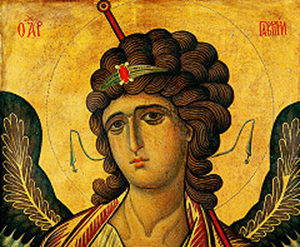
Seeing the Face of Jesus
Homily for the Fourth Sunday of Easter
April 26, 2026

Homily for the Fourth Sunday of Easter
April 26, 2026
Homily for Sunday, April 26, 2026
The Fourth Sunday of Easter
John 10:1-10
When interpreting scripture,context is everything. To better appreciate this morning’s text from John chapter 10, we will consider 1) its context within the Roman empire, 2) its context within the Hebrew tradition,and 3) it’s context within St. John’s Gospel.
First, the context within the Roman empire. St. John’s Gospel is thought to have been written in the final decade of the first century during the reign of Emperor Domitian. About Domitian, in his book The Lives of the Caesars Suetonius wrote:
“From his youth [Domitian] was… presumptuous and unbridled both in act and in word” (Domitian,12). “He exercised all the tyranny of his high position” (1). “In his administration… he turned virtues into vices; for… virtue was contrary to his natural disposition” (3). “He was…rapacious… he was cruel” (3). “He made himself free” with many women (1). “He began expeditions... which were uncalled for” (2), and many campaigns he undertook “without provocation” (6). “He constantly gave grand, costly entertainments… in the amphitheater and in the circus” (4). “He erected… many arches in the regions of the city, adorned with chariots and triumphal emblems” (13). He “restored many splendid buildings… but in all cases with the inscription of his name only, and with no mention of the original builder” (4). “He did away with the distribution of food to the people” (7). “He pardoned many for past offenses” (9). “He banished all the philosophers” (10). “He suffered no statues to be set up in his honor… except of gold and silver” (13). “Reduced to financial straits by the cost of his buildings and shows… he resorted to every sort of robbery…” (12).
The list could go on… But we recognize the type.
Second, the passage’s context within the Hebrew tradition. One of the ways the Hebrew tradition speaks of experiencing God’s presence is to “see his face.” In Exodus, “The Lord used to speak to Moses face to face,” (33:11). The Psalmist prays, “You speak in my heart and say, ‘Seek my face’”(27:11). Or again, “Search for the Lord and his strength; continually seek his face” (105:4). Or recall the famous blessing in Numbers that bids that “The Lord make his face to shine upon you” (Num 6:25). Remember, too, conversely, the times God is said to have hidden God’s face: “Hide not your face from me,” pleads the Psalmist (27:12); because when, “You hid your face… I was filled with fear”(30:8). Or remember how in the final chapter of Revelation, the highest destiny of humanity is to be before the throne of God and the Lamb and to “see his face” (Rev 22:4). The Hebrew religion was a religion of the divine presence that presupposed the possibility of a personal relationship with God and that assumed that even now in this life, with our senses we can apprehend something of God – we can “see his face.”
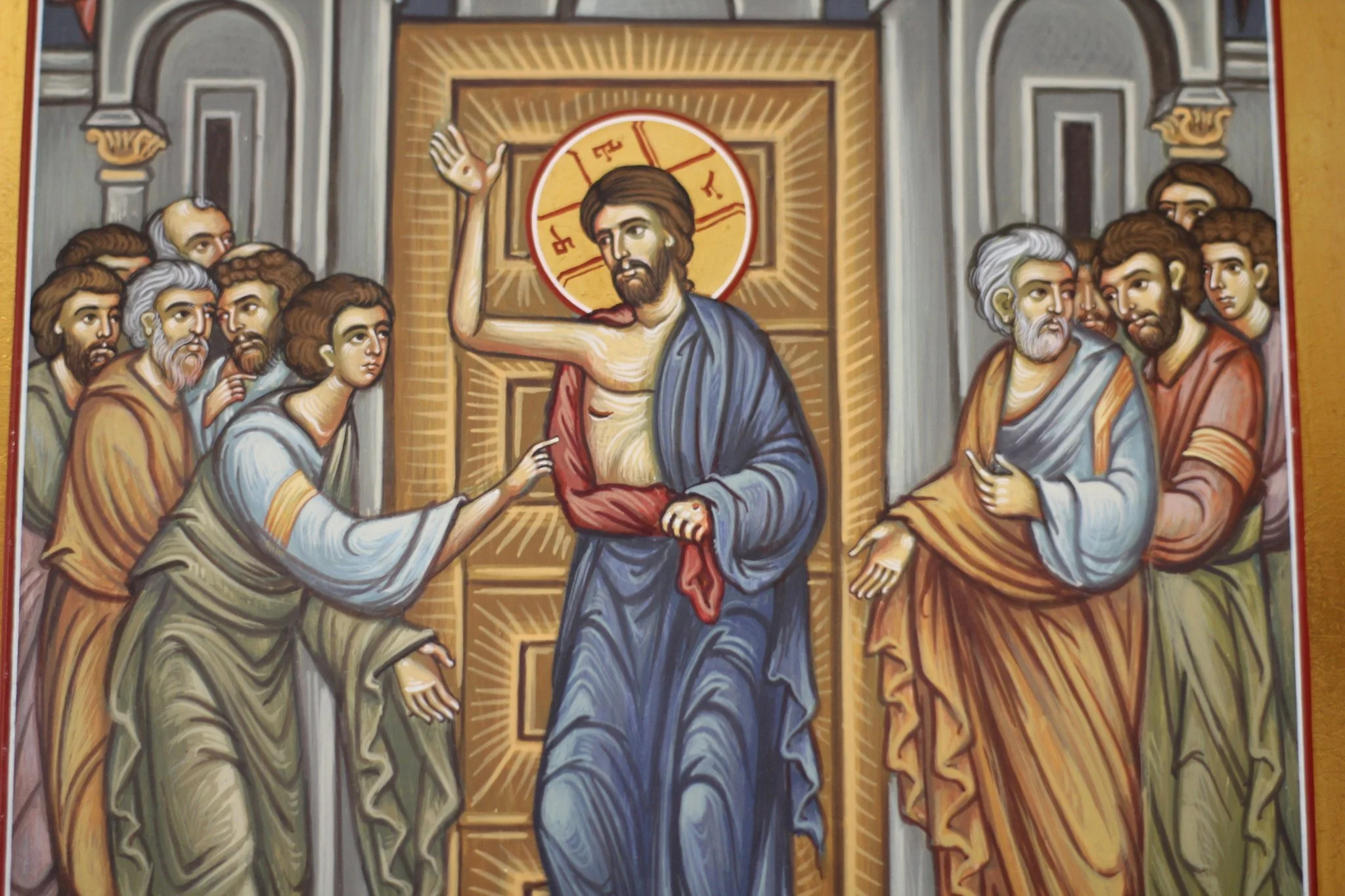
Lastly, the context of this passage within John’s Gospel. Already in his Prologue John tips his hand to the Hebrew concept of “seeing” God: “No one has ever seen God,” John writes. “It is the only Son, himself God… who has made him known” (1:18). And John peppers the remainder of his Gospel with passages about “seeing” God in seeing Jesus: Chapter 1: The disciples said to Jesus, “’Rabbi… where are you staying?’ He said to them, ‘Come and see.’”(1:38-39). Chapter 12: “Some Greeks… came to Philip… and said to him, ‘Sir, we wish to see Jesus’” (12:21). Chapter 14:. “Philip said to Jesus, ‘Lord,show us the Father, and we will be satisfied…’ Jesus said… ‘Whoever has seen me has seen the Father’” (14:8-9).
Perhaps the most important passage in John’s Gospel about “seeing the face of God” is the story of Jesus healing the man born blind, a passage we heard on the Fourth Sunday in Lent and that occurs immediately before today’s passage. To refresh us: “Though I was blind,” the man told the Pharisees, “Now I see” (John 9:25). When later Jesus found the man, he asked,“’Do you believe in the Son of Man?’ He answered, ‘And who is he, sir? Tell me,so that I may believe in him.’ Jesus said to him, ‘You have seen him, and the one speaking to you is he’” (9:35-37). Today’s passage about sheep and Jesus as the gate for the sheep is actually the latter part of the story of Jesus opening the eyes of the man born blind. In today’s passage, Jesus begins to unpack the meaning of the sign he has just performed – those who see Jesus, and those who hear his voice speaking to them, are Jesus’ “sheep.”
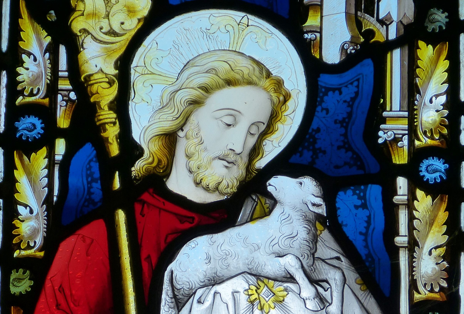
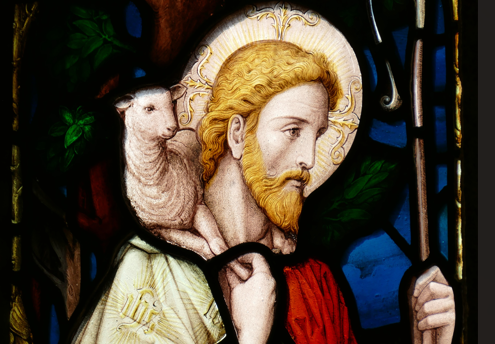
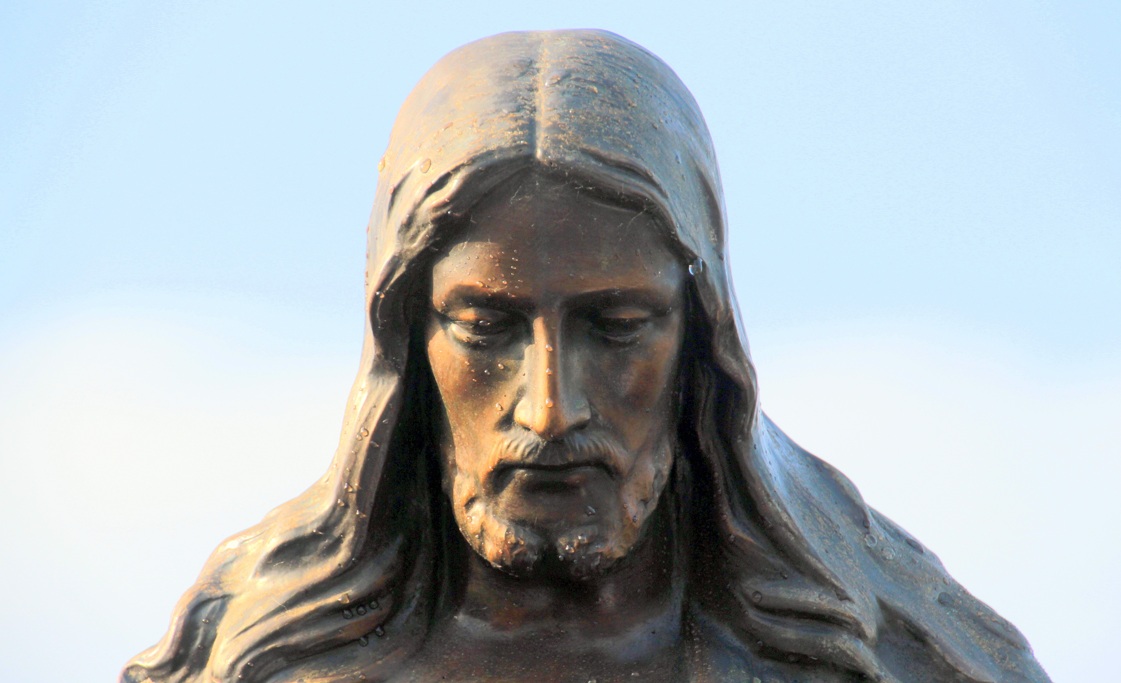
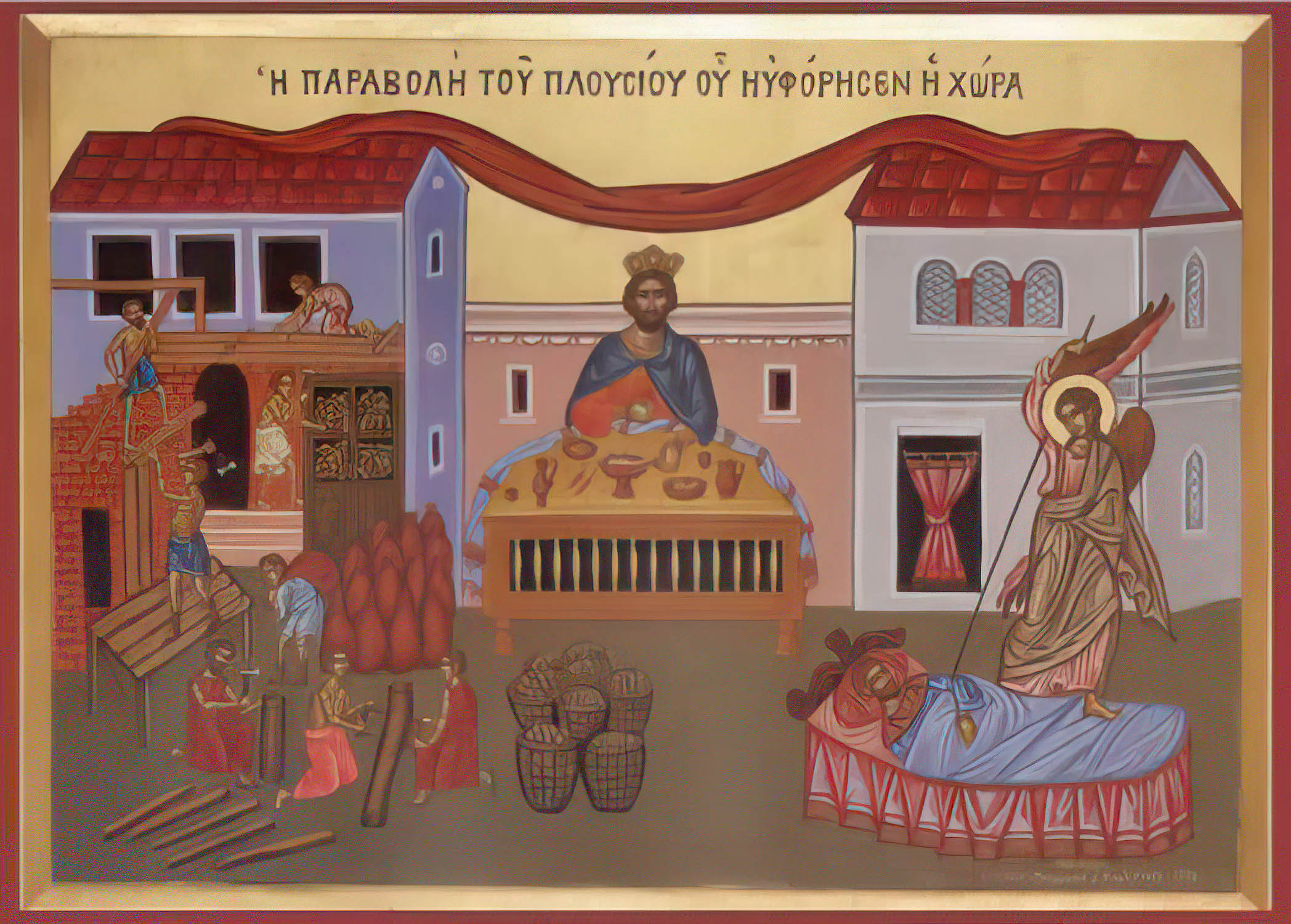
Given the context of the cruel and corrupt Emperor Domitian, given the importance in the Hebrew scriptures of “seeing the face of God,” and given the context of today’s passage being part of the story of the healing of the man born blind, I wonder if with his image of Jesus the Good Shepherd John was reminding his community that there is another reality, a true reality of greater consequence than the manufactured reality of Domitian and the Roman empire. In contrast to the emperor, Jesus is the “Good Shepherd,” or in Greek the ποιμὴν ὁ καλός. Though translated as “good,” καλός is a much richer word. Kαλός has moral overtones and might just as well be translated “beautiful,”or “noble,” or “honorable” or “excellent,” or even “morally beautiful.” If Domitian was morally reprehensible, Jesus is morally beautiful, suggests John. And to look on Jesus – not on the Emperor; don’t fall into the trap of looking at Emperor, John implies – [to look on Jesus] and like the blind man to speak with him is to “believe.”
Jesus said, “Do you believe in the Son of Man?” He answered, “And who is he,sir? Tell me, so that I may believe.” Jesus said to him, “You have seen him, and the one speaking with you is he.” He said, “Lord, I believe.” And he worshipped him.
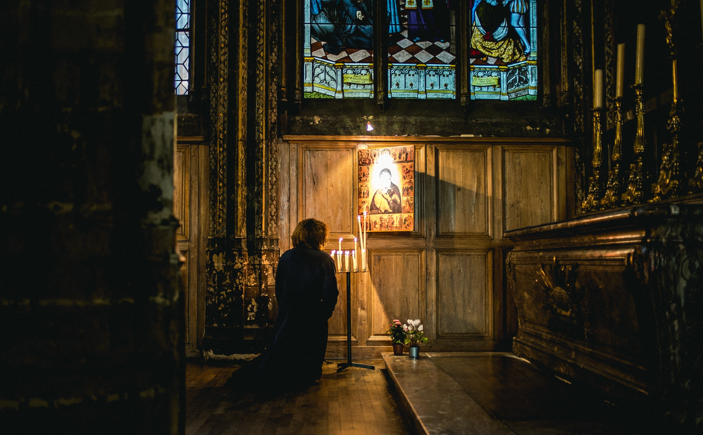
Pope Benedict once wrote that, “Seeing Jesus, in whom we also see the Father, is a thoroughly existential act.” When we see the face of Jesus, we place ourselves in the context of Moses speaking with God face to face; we stand in the context of the Psalmist who continually seeks his face; we place ourselves in the context of the God who makes his face to shine upon us. To look on Jesus and to worship him is, with the blessed in Revelation, to live into the highest destiny of humanity.
May God give us the grace for our eyes to be open, to see past the “circus” around us, past the thieves and bandits who steal and kill and destroy, to see the face of God in Jesus, who is the gate and whose voice we know, and whom to see and worship is our highest destiny. For it is not the emperor but Jesus who is our Good Shepherd and who wants us to have life and to have it abundantly.




Homily for the Seventeenth Sunday after Pentecost

















Homily for the Marriage of Joel Diamond and Eliza Cotter

Homily for the Feast of the Baptism of Our Lord