Here I am
Homily for the Feast of the Annunciation
March 25, 2026
Homily for the Feast of the Annunciation
March 25, 2026
Homily for Wednesday, March 25, 2026
The Feast of the Annunciation
Luke 1:26-38
Preached at The Church of the Redeemer, Chestnut Hill,MA
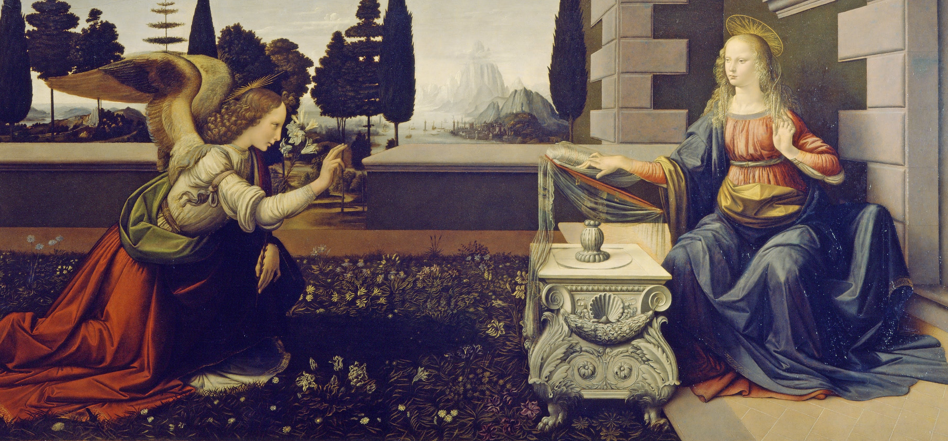
Much has been made about Mary saying “Yes” to God. Perhaps we’ve heard homilies about Mary saying “Yes” to God. Perhaps some of us have read theological articles about Mary saying “Yes” to God. It could be that some of us have even read books about Mary saying “Yes”to God. But there’s a catch… Mary didn’t actually say “Yes” to God. What Luke reports Mary as saying is Ἰδοὺ, ἡ δούλη, which the King James translates as, “Behold,the handmaid;” or as more recent scholarship often translates, “Here am I, the servant.”
Mary’s “Here am I” both resonates with the record of scripture and is a response more nuanced than a mere “Yes.” Recall how in the story of Abraham’s sacrifice of Isaac in Genesis chapter 22, when God initially called, “Abraham!” Abraham answered, “Here I am.” Later, as Abraham took the knife to kill Isaac, the angel of the Lord cried out, “Abraham!” and Abraham again answered, “Here I am.” Or recall how in Exodus chapter 3 when God called to Moses from the burning bush Moses responded, “Here I am.” Or recall, too, in 1 Samuel chapter 3 the story of the boy Samuel in the temple – when God called him three times in the night, three times Samuel came to Eli and said, “Here I am.” Or remember the call of the prophet in Isaiah chapter 6: “Whom shall I send? Who will go for us?” asked the voice of the Lord. Isaiah responded, “Here I am.” And in the 9th chapter of the Acts of the Apostles, when the Lord told Ananias in a vision to go lay hands on Saul so that he might regain his sight, Ananias answered, “Here I am.” Mary’s “Here am I” stands in a long line of the faithful responding to God’s call with not merely a “Yes,” but with, “Here I am.”
The distinction between a mere “Yes” and “Here am I” may seem small but is significant. “Yes” reveals little about what might be going on inside the speaker. Is the“Yes” a glad “Yes” in which the speaker readily does what is asked? Or is the “Yes” a grudging “Yes” in which the speaker only grudgingly fulfills the request? But “Here am I” expresses not merely an assent or a willingness, but rather, “I am here. I am present. I am available to you.” When Abraham said to God, “Here I am,” he was saying, “I am present and available to whatever you want me to do, God.” When Moses at the burning bush said to God, “Here I am,” he even took of his sandals as if to say, “I am so present to you, God, that – look – I’m not going anywhere.” Or when God called to the boy Samuel,Samuel’s “Here I am” was not a mere “Yes,” but involved a change of state and of place: from sleeping to waking, from lying down to running, from his own place of sleeping to Eli’s, as if to say: “I have left behind everything and set aside what I was doing so that I might be entirely present to you and available to what you want.”
“Here am I” reveals much more about the speaker than a mere “Yes.” In all the places in scripture where one says to God, “Here I am,” the response is neither grudging nor forced. We know rather that in all cases – for Abraham and Moses, for Samuel, for Isaiah, for Ananias and for Mary – [in all cases] the speaker possesses an interior availability to do God’s will. As Mary said, “Let it be with me according to your word.”
The whole point of the spiritual life – the reason why God created us, why God called Israel to be his people, why God sent Jesus, why God gave us the scriptures, why we worship, why we do spiritual practices – [the whole point of this life given to us by God] is internal availability. God wants us to have the same availability that Mary expressed when she said, “Here am I, the servant of the Lord; let it be with me according to your word.” God wants nothing more – the whole point of everything! – is that we might stand before him and – without coercion, without any sense of “should,” “ought” or “supposed to” – to freely choose to accept God and God’s love.
In our Tradition, we call this internal availability “interior freedom,” or simply,“freedom.” In his Spiritual Exercises, Ignatius of Loyola offers a way for us to consider our own interior freedom. The “Three Types of People” exercise goes like this:
Three different people suddenly have come into (Ignatius says 10,000 ducats; but we’ll say) ten million dollars. Each of the three desires to save their soul and to find peace, and each knows that in order to find salvation and peace, they first must set aside any attachment to the ten million dollars. Imagine standing in the presence God and of all the saints, Ignatius invites, and ask God for the grace to choose whichever path might best serve and give glory to God. These three people represent three types of people, Ignatius says. The first we might call “The Procrastinator.” The Procrastinator recognizes that he is attached to the ten million dollars and that in order to find peace he must rid himself of the attachment. He tells himself that he will do so… but not until “tomorrow!” He dies never having rid himself of his attachment to money. The second type of person we might call “The Compromiser.” Like The Procrastinator, she, too, recognizes that she is attached to the ten million dollars and knows she must set aside this attachment in order to save her soul and to find peace. Unlike The Procrastinator, The Compromiser actually begins to give away the ten million dollars in small amounts here and there to various charities. But she never takes the leap into giving generously, and she, too, dies still attached to the money. The third type of person is The Free Person. The Free Person recognizes his attachment to the ten million dollars. But he recognizes, too, that the only way to be free of this attachment and to find the salvation and peace his soul seeks is – surprisingly – not necessarily to give the ten million dollars away. Rather, standing in the presence of God and of all the saints, The Free Person prays for the grace to come to an attitude in which “there remains no inclination either the keep the money or to dispose of it,” says Ignatius. He prays, too,that in his choice about the money he “be motivated solely by what will be better for the service and praise of our Divine Majesty.” Only then, from this place of complete interior freedom, will he be able to rightly choose to “keep or reject the money solely according to what God will move.” And lest we deceive ourselves into thinking that, “Yes, I am free from this attachment, so I will keep the money,” Ignatius counsels that we pray God also “for actual poverty,” indeed “to beg of God for actual poverty, to plead for it, ”and then to let God do as God wills" (Exercises, 149-157).
On this Feast of the Annunciation, we remember not so much Mary’s “Yes” as we remember Mary’s “Here am I” – her presence, her availability, her interior freedom to “let it be with me according to your word.” I wonder, what attachments or obstacles might be in the way of you finding the peace your soul seeks? I wonder, can we remember this Feast and allow Mary’s witness to inspire us to greater interior freedom, to pray (as Ignatius suggested) that our choices “be motivated solely by what will be better for the service and praise of our Divine Majesty?” So that we, with Mary,might know the freedom – the perfect freedom – that comes from openly and honestly saying to God, “Here am I, the servant of the Lord; let it be with me according to your word.”

Homily for the Seventeenth Sunday after Pentecost


















Homily for the Marriage of Joel Diamond and Eliza Cotter

Homily for the Feast of the Baptism of Our Lord