The Urgency of the Good News
Homily for the Third Sunday of Easter
April 19, 2026

Homily for the Third Sunday of Easter
April 19, 2026
Homily for Sunday, April 19, 2026
The Third Sunday of Easter
Luke 24:13-35
During the Easter season our Sunday Gospel lesson almost always comes from St. John’s Gospel, except… In each of the three lectionary years, on one of the Sundays of Easter, the Gospel comes from Luke chapter 24, as it does this morning. And I want to get back to what Luke chapter 24 adds to the readings from John, but first, James Joyce’s Ulysses and also Virginia Woolf’s Mrs. Dalloway.
Both James Joyce’s Ulysses and also Virginia Woolf’s Mrs. Dalloway take place over the course of one day: in the case of Ulysses, June 16, 1904; and for Mrs. Dalloway, an unspecified Wednesday in mid-June, 1923. In Ulysses, over the course of that one day Leopold Bloom, the protagonist (deep breath): makes breakfast for his wife, reads a letter from his daughter, buys a pork kidney, visits the chemist to buy lemon soap, attends a funeral, eats a gorgonzola sandwich, feeds gulls along the river, helps a blind man cross the street, visits the National Museum, walks on the beach, wanders Dublin’s red-light district, meets a drunken Stephen Dedalus, gazes at the stars, walks home and goes to bed with his wife. In Mrs. Dalloway, over the course of one day Clarissa Dalloway (another deep breath): buys flowers for the party she will host that evening, walks through Westminster, crosses Victoria St , hears a car backfire, hears a plane fly overhead, hears Big Ben chime 10:00am, sees the ducks in St. James’ park, witnesses a crowd gather around a luxurious car with closed blinds, reminisces about her youth, wonders about her decision to marry Richard Dalloway instead of Peter Walsh, receives an unexpected visit from Peter Walsh, experiences complicated feelings for her friend Sally Seton, arranges rooms and straightens chairs in preparation for the party, mends her green dress, hosts a successful party, learns mid-way through the party of the suicide of the war veteran Septimus Smith, ponders mortality and the meaning of life and the choices she has made, and returns to her party.
Both Leopold Bloom and Clarissa Dalloway had full days!
The same might be said of the disciples in Luke chapter 24, from which today’s Gospel lesson comes. Like Ulysses and Mrs. Dalloway,Luke chapter 24 takes place over the course of one day, the first Easter Day. On that first Easter Day… At early dawn, the women went to the tomb,taking the spices they had prepared. Finding the stone rolled away, they went in but did not find the body. They saw two men in dazzling clothes who said to them, “He is not here but has risen.” When they told this to the eleven, Peter ran to the tomb, looked in, and went home. Later that morning (in today’s Gospel lesson) two disciples were walking to a village called Emmaus when Jesus came and went with them, though they did not recognize him. The disciples told Jesus about the empty tomb and the vision of angels who said Jesus was alive. “Beginning with Moses and all the prophets,Jesus interpreted to them things about himself in all the scriptures.” Since the day was nearly over, the two men urged Jesus to stay with them. At dinner when he took, blessed and broke the bread and gave it to them, they recognized him. “Were not our hearts burning within us when hewas talking to us on the road?” they asked. The disciples returned to Jerusalem to tell the others about what they had seen (which is where today’s Gospel lesson ends). But the day continues with Jesus appearing again to the disciples, who doubted. Jesus asked for something to eat, and they gave him a piece of broiled fish, which he ate and further “opened their minds to understand the scriptures.” And if the Luke chapter 24 timeline is to be believed, the Ascension happened on that one day, too. In Luke chapter 24, the disciples had a full day!
If in Ulysses and Mrs.Dalloway there is a serenity, an unhurriedness, to the one-day – as the day unfolds, the authors invite the reader into a leisurely look at the protagonists’ internal worlds – [if in Ulysses and Mrs. Dalloway there is an unhurriedness to the one day,] Luke chapter 24 is seismic – in one day, in an instant almost, Jesus’ resurrection upends everything. Now the disciples’ sorrow is turned into joy. Now they know Jesus’ presence in the breaking of bread. Now they understand how the scriptures are fulfilled. Now Jesus’ death makes sense. Now the disciples are ready to be “clothed with power from on high” and to receive the Holy Spirit. Now the disciples’ are ready to be sent to proclaim “repentance and the forgiveness of sins… to all nations.” Now the disciples’ lives will never be the same.
Getting back to what Luke chapter 24 adds to an Easter season in which we otherwise hear only from John… In Greek there are multiple words for time. Χρόνος refers to quantitative time, what we might call “clock time.” Καιρός is often translated as “opportunity,” or “appointed time,” and has a “seize the day” quality to it. Αἰών, often translated as “eternal,” or “forever,” is the source of our word “eon.” Some New Testament scholars have noted that if the Synoptics tend to be characterized by καιρός, a “seize the day” kind of time, John’s Gospel in contrast is characterized by αἰών. In John, there is never any rush. Time has an ageless feel to it, and Jesus moves about calmly, almost serenely, completely all-knowing and always in charge.
For John, one of the feelings associated with Jesus’ resurrection is peace. “Peace be with you,” the risen Jesus said (twice!) when he appeared to the disciples (John 20:19). Given John’s emphasis on peace it makes sense, then, that he would write his Gospel with an irenic, “forever-like” tone. Luke on the other hand is more… “impulsive” may not be quite the right word? But for Luke, Jesus’ resurrection is not so much a time for experiencing peace as it is a time to “get cracking” and to get things done – in Luke’s words: “to proclaim… repentance and the forgiveness of sins… to all the nations, beginning in Jerusalem.” Indeed, if Luke wrote his Gospel in order to tell “about all that Jesus began to do and teach until the day he was taken up into heaven,” he wrote the Acts of the Apostles to show how the apostles carried out the instructions he had given them through the Holy Spirit (Acts1:2). Or, as the title suggests, Luke wrote it to tell of the apostles’ acts.
In the middle of the Easter season in which we hear almost exclusively from John’s Gospel, our one reading from Luke chapter 24 reminds us of the urgency of the Good News. Yes, Jesus’ resurrection is a source of peace; yes, Jesus’ resurrection is a source of joy. And, yes, I hope that we this Easter season might set aside time to relish and savor these graces of peace and joy that characterize St. John’s Gospel. But let us not forget the outward impulse of the Gospel, the urge of the Gospel to go out and the urgency with which the world needs to hear it.
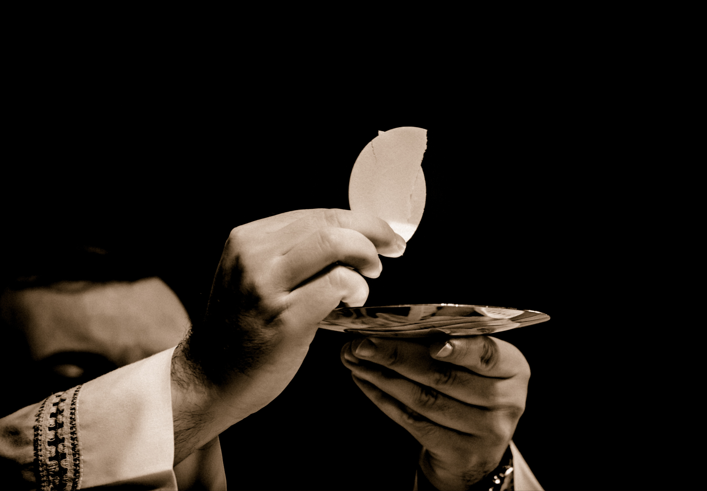
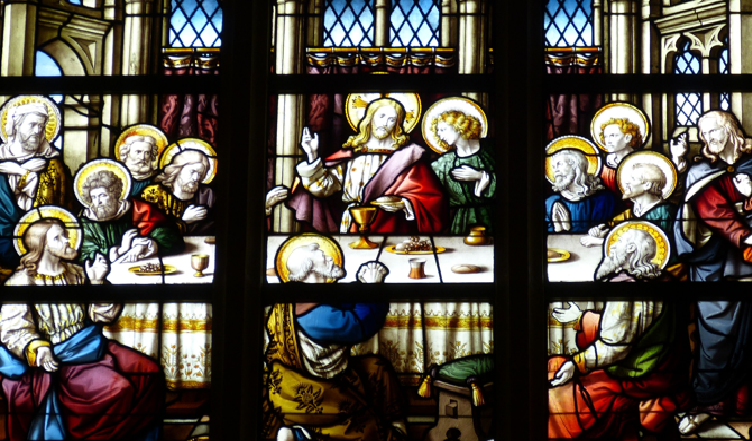
I hope that, as the first disciples knew Jesus in the scriptures and the breaking of the bread, so we this morning might likewise know Jesus in the scriptures and in the breaking of the bread. And just as the disciples “at that same hour” got up and went out to tell others about Jesus’ resurrection, so might we, as this same hour and every hour, live lives that bear witness to the life-giving, life-changing, power of Jesus’ resurrection.



Homily for the Seventeenth Sunday after Pentecost




















Homily for the Marriage of Joel Diamond and Eliza Cotter

Homily for the Feast of the Baptism of Our Lord