The Wedding Garment
Homily for the Twentieth Sunday After Pentecost
October 11, 2026

Homily for the Twentieth Sunday After Pentecost
October 11, 2026
Homily for October 11, 2026
The Twentieth Sunday After Pentecost
Matthew 22:1-14
In Matthew’s Gospel, it’s never a good thing to be addressed as “Friend.” In the Parable of the Laborers in the Vineyard,for example (20:1-16), the vineyard owner said to the worker who had worked all day and who grumbled about being paid the same as those who had worked only one hour, “Friend, I am doing you no wrong; did you not agree with me for the usual daily wage?” (20:13). At his betrayal in the Garden of Gethsemane, Jesus said to Judas, “Friend, do what you are here to do” (26:50). And in chapter 11, the religious authorities referred to Jesus as a “friend of tax collectors and sinners” (11:19).
In today’s Gospel, the king addresses the man without a wedding garment as “Friend.” “Friend,” he says, “How did you get in here without a wedding garment?”
And he was speechless. Then the king said to the attendants, “Bind him hand and foot, and throw him into the outer darkness, where there will be weeping and gnashing of teeth.”
In Matthew’s Gospel, it’s never a good thing to be addressed as “Friend.”
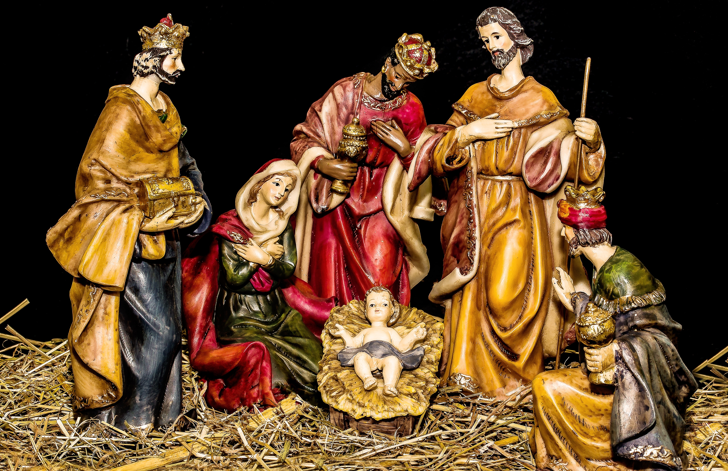
I want to get back to the king and the “friend” without a wedding garment, but first, how in Matthew’s Gospel Jesus ministers even to – and perhaps especially to – those who are on the margins. For example, in Matthew chapter 2 the Magi – foreigners and pagans – learn about and come to worship the infant Jesus. In chapter 8, Jesus “stretched out his hand and touched” a leper – one who was “untouchable” – and healed him (8:3). Also in chapter 8, Jesus not only healed the centurion’s servant but also said to the centurion, a Roman: “Truly I tell you, in no one in Israel have I found such faith” (8:10). In chapter 9, Jesus called Matthew, a tax collector, to be his disciple (9:9-13). In chapter 15, Jesus went outside the boundaries of Israel to the region of Tyre and Sidon where he met the Canaanite woman, a non-Israelite, and healed her daughter (15:21-28). In Matthew’s Gospel, though Jesus ostensibly was “sent only to the lost sheep of the house of Israel” (15:24), yet he ministered even to, and perhaps especially to, those who were on the margins.
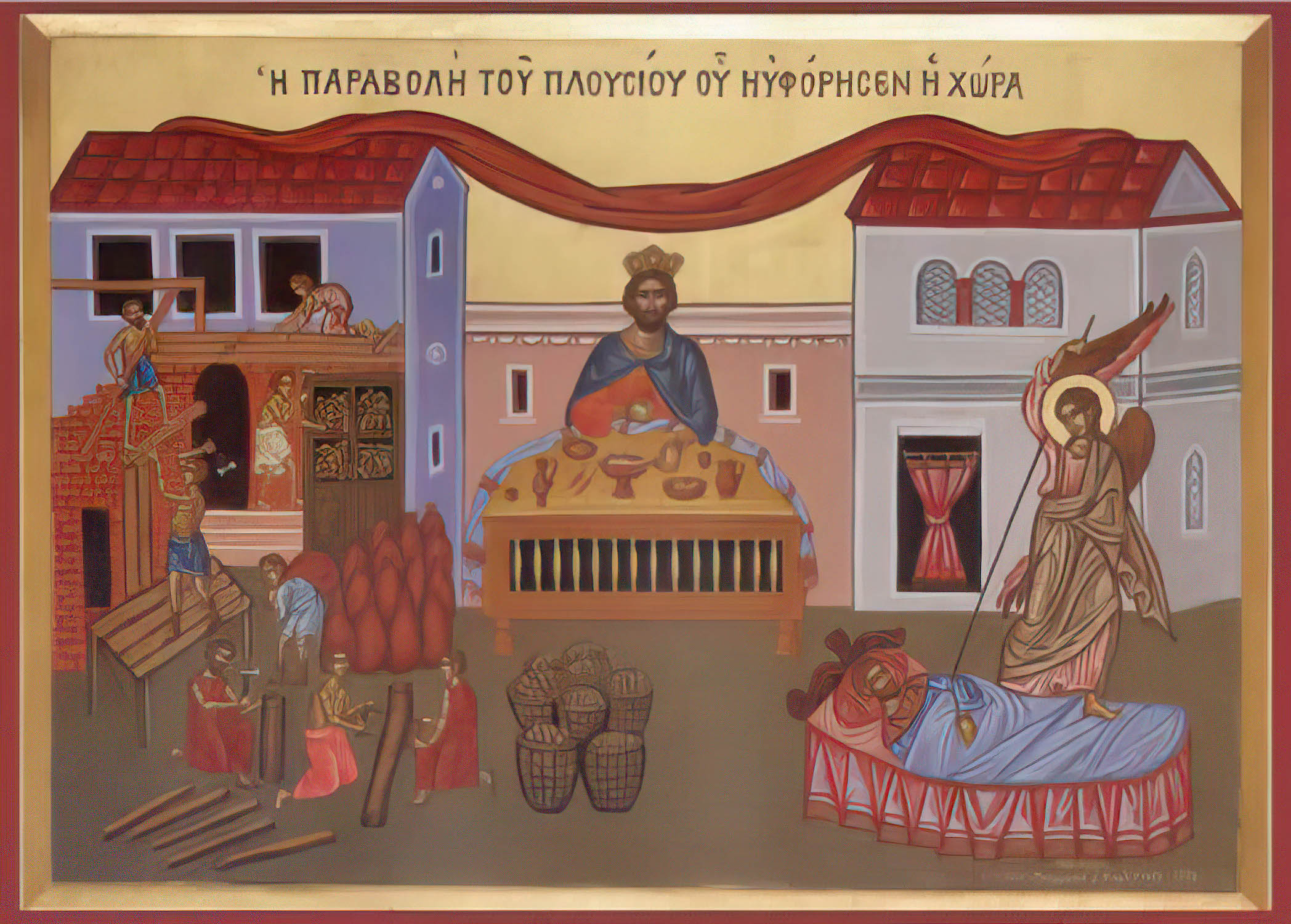
Given the wide reach of Jesus’ ministry, the generous invitations of the king in the opening part of today’s parable come as no surprise. The“king” gives a wedding banquet for his son and invites everyone: “Look, I have prepared my dinner, my oxen and fat calves have been slaughtered, and everything is ready… Go therefore into the main streets and invite everyone.” The generous invitations of the “king” may come as no surprise, but the seemingly out-of-proportion responses, both from those invited and also the king, likely do come as a surprise. As Matthew writes, those invited made light of the king’s invitation, “seized his slaves, mistreated them, and killed them.” “The king was enraged. He sent his troops, destroyed those murderers, and burned their city.” The parable then becomes even more troubling:
“But when the king came in to see the wedding guests, he noticed a man there who was not wearing a wedding robe, and he said to him, ‘Friend’” – and we know things are not going to end well when in Matthew someone is addressed as “friend” – “’Friend, how did you get in here without a wedding robe?’ And he was speechless.”
We might wonder how a man invited at random off the street would be expected to be wearing a wedding robe. Nonetheless he is subject to that punishment that is unique to Matthew’s Gospel: “Bind him hand and foot and throw him into the outer darkness, where there will be weeping and gnashing of teeth.”
Jesus’ parables toward the end of Matthew – like the Parable of the Landowner and the Vineyard we heard last week (Matt 21:33-46), or like this morning ’s Parable of the Wedding Banquet, – [Jesus’ parables toward the end of Matthew] walk a tension between, on the one hand, God’s generosity – the king invited everyone to the banquet – and on the other hand, God’s judgment – on account of not wearing a wedding garment, the man is cast “into the outer darkness.” Perhaps more than any other evangelist,Matthew places his readers in a tension between God’s grace and God’s judgment.
To perhaps better make sense of this tension, I will share a story…
A colleague tells of going to a baseball game with two other colleagues. For several innings, try as they may, an unruly drunken fan a few rows away was making it difficult for them to enjoy the game, until… several beefy men in yellow “Security” jackets arrived and bundled the man off and out of the stadium. One of my colleagues turned to the others and said: “Well, obviously, he wasn’t wearing a wedding garment.”
Everyone is invited to the“game,” even (says Matthew) tax collectors, Canaanites and Romans. But our conduct at the “game” matters, insists Matthew, and there are consequences for “unruly behavior.” The importance of our conduct perhaps is made most clear in the final parable of Matthew’s Gospel, in chapter 25. Again, there is a king, and he says to the “sheep” at his right, “I was hungry and you gave me food, I was thirsty and you gave me something to drink, I was a stranger and you welcomed me, I was naked and you gave me clothing, I was sick and you took care of me, I was in prison and you visited me.” The king then says to “goats” at his left: “I was hungry and you gave me no food, I was thirsty and you gave me nothing to drink, I was a stranger and you did not welcome me, naked and you did not give me clothing, sick and in prison and you did not visit me.” “And these will go away into eternal punishment, but the righteous into eternal life.”
Our king is generous, and he invites everyone to the “game,” even and perhaps especially those on the margins. Our conduct at the “game” matters – the unruly risk being thrown out; or (to borrow from today’s parable) those without a “wedding garment” will be cast “into the outer darkness.”
St. Augustine identifies the wedding garment as charity, or love. In his homily on this morning’s text, Augustine closes by quoting Paul’s famous passage about love in 1 Corinthians chapter 13. I will leave us with the same words with which Augustine left his congregation:
I have gone through all my clothes and considered them, but have not yet come to that wedding garment. In his letter to the Corinthians the Apostle brings to me a collection of fine clothing and lays them before me. I say to him, “Show me, if you have found among them that ‘wedding garment.’” The Apostle unfolds them one by one: “Though I speak with the tongues of men and of angels… though I have all knowledge, and the gift of prophecy, and all faith so that I could move mountains; though I give away all my goods to the poor and my body to be burned…” These are precious garments – nonetheless, there is not yet here that wedding garment. (Paul, why do you keep us in suspense?) “If,” he continues, “I have not love, nothing profits me.” Here – love – is the wedding garment. Put it on, you guests, that you may sit down in peace. Do not say we are too poor to have that garment. Clothe others, and you will be clothed yourselves. Run to Jesus, beseech him – he knows how to clothe his naked ones. Then you will be free from the fear of the outer darkness, from the binding of your hands and feet. Keep then that wedding garment. Let him who erstwhile was naked now be clothed. Put it on, and so sit down insecurity when he comes to inspect.




Homily for the Seventeenth Sunday after Pentecost

























Homily for the Marriage of Joel Diamond and Eliza Cotter

Homily for the Feast of the Baptism of Our Lord