God’s Extraordinary, Lavish and Incalculable Generosity
Homily for the Seventeenth Sunday after Pentecost
September 20, 2026

Homily for the Seventeenth Sunday after Pentecost
September 20, 2026
Homily for September 20, 2026
The Seventeenth Sunday after Pentecost
Matthew 20:1-16
Last Sunday’s Gospel lesson reminded us that the extraordinary, lavish, and incalculable generosity of God extends also to forgiveness and mercy. “How often should I forgive?” Peter asked Jesus, “As many as seven times?” Jesus said to him,“Not seven times, but, I tell you, seventy-seven times.” Jesus then told a parable about a manager forgiving a slave a debt of 10,000 talents, roughly six billion dollars in today’s money. God’s generosity, including God’s mercy and forgiveness, is extraordinary, lavish and incalculable.
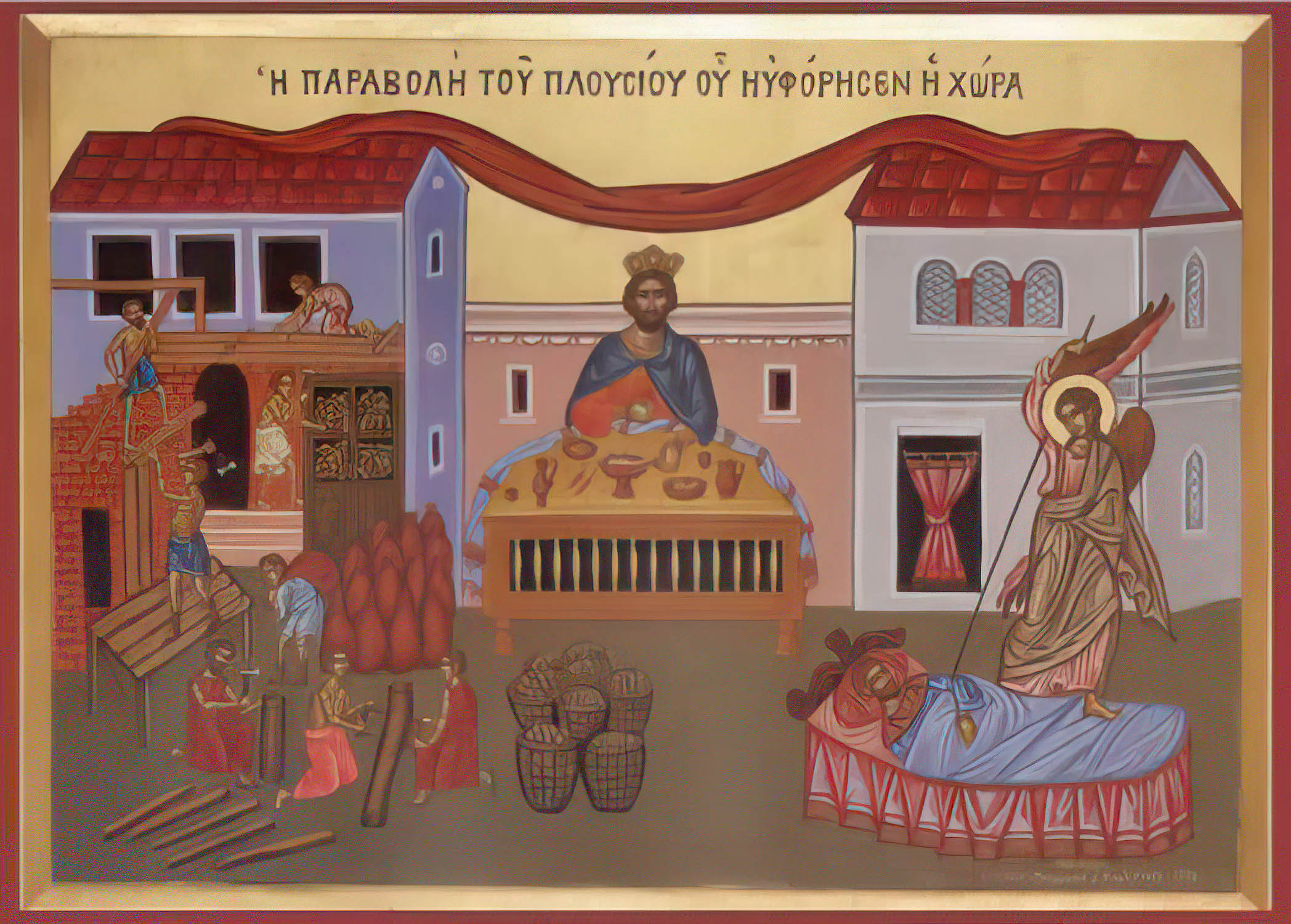
Today’s parable, the so-called Parable of the Laborers in the Vineyard, continues the theme of God’s extraordinary, lavish and incalculable generosity. In this morning’s parable – which is unique to Matthew’s Gospel – the owner of a vineyard goes out at dawn, and then again at 9:00, noon, 3:00 and 5:00 to those standing in the marketplace without work. “Why are you standing here idle all day?” the landowner asked. “You also go into the vineyard.” At the end of the day, the landowner paid each the usual daily wage. Those who had begun at dawn – who had “borne the burden of the day and the scorching heat” – “grumbled against the landowner.” “These last worked only one hour, and you have made them equal to us,” they said. “I am doing you no wrong,” said the landowner. “Did you not agree with me for the usual daily wage?... Am I not allowed to do what I choose with what belongs to me? Or are you envious because I am generous?”
There are multiple ways we could interpret this parable. “With God, our lives have meaning and purpose,” could be one way to interpret it. “Until we respond to God’s call, our lives risk being like those standing in the marketplace – idle, drifting and without purpose.” Or – and this morning’s Old Testament lesson from Jonah supports this interpretation – “God invites not just Israel but all people to be part of his mission. Though the Israelites have been working since dawn, even the Gentiles who come late can receive ‘the usual daily wage.’” Or – and this is the approach St. Augustine takes – “Do not think that because those who began work at the end of the day were paid the same as those who began work at the beginning of the day, that it’s OK to put off becoming a Christian.” “Why dost thou put off him that calleth thee, certain as thou art of the reward, but uncertain of the day?” asks Augustine. “Take heed then lest what he offers to give thee by promise, thou take from thyself by delay” (Sermon 87,6,8).
Keeping in mind that tomorrow, September 21, is the feast day of St. Matthew, I want to set this morning’s Gospel lesson alongside tomorrow’s – the story of the call of Matthew,from Matthew chapter 9 – and to ask if perhaps this morning’s parable – which remember is unique to Matthew – might in some way be autobiographical for Matthew. In the story of Jesus’ call to Matthew: Jesus “saw a man named Matthew sitting at the tax booth;”
He said to him, “Follow me.” And he got up and followed him. As he sat at dinner in the house, many tax collectors and sinners came and were sitting with him and his disciples. When the Pharisees saw this, they said to his disciples, “Why does your teacher eat with tax collectors and sinners?” When he heard this, he said, “Those who are well have no need of a physician, but those who are sick. Go and learn what this means,‘I desire mercy and not sacrifice.’ For I have come to call not the righteous but sinners.”
It seems that Matthew himself had experienced the extraordinary, lavish, incalculable generosity of God. As a tax collector, Matthew would have been reviled, an outcast, in Hebrew society. Perhaps Matthew didn’t think God’s promises to Israel pertained to him, whose profession grouped him with “sinners.” Perhaps, though Matthew described the “landowner” calling others, Matthew himself did not feel worthy to stand in the marketplace and to be called. Even though Matthew had all the money he wanted, perhaps Matthew’s life – like the lives of those standing idle – was drifting and without meaning or purpose.
And then Matthew – who may have felt an outcast and unworthy, who may have spent years feeling his life was drifting without meaning – [then Matthew] heard Jesus call: “Follow me… You also go into the vineyard.” Matthew knew he was not a “dawn toiler.” He knew he had not answered the call at 9 o’clock or at noon or even at 3:00. Given his profession and that he had focused much of his life on making money, most likely dishonestly, I wonder if Matthew knew that (in his own words from chapter 6) he had served wealth and not God (Mt 6:24). Perhaps Matthew saw himself among the “5 o’clockers” who had only just arrived, and he probably expected to be “paid” only a portion of “the usual daily wage.”
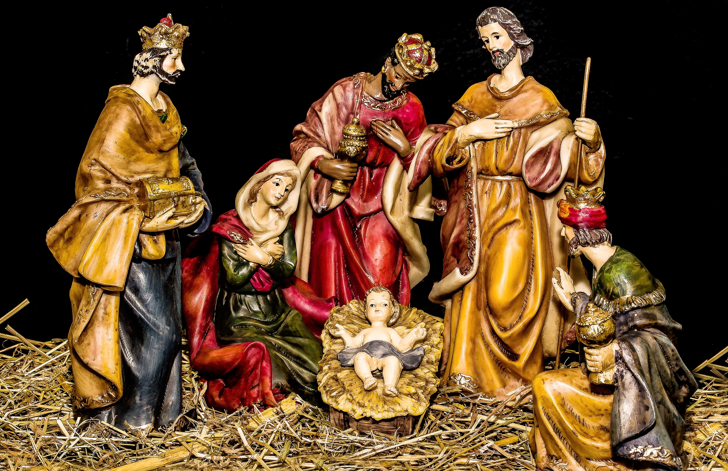
But Jesus’ generosity overwhelmed Matthew. Despite Matthew’s being a tax collector, Jesus called Matthew, saying to him, “Follow me… You also go into the vineyard.” In response, Matthew not only offered his life in service of the Lord, but also wrote a Gospel filled with stories of lavish generosity. In chapter 2, for example, Matthew tells the story of the Magi opening their treasure chests and offering the infant Jesus gifts of gold, frankincense and myrrh (2:11). In chapter 8, even though he reports that Jesus had been sent “only to the lost sheep of the house of Israel” (e.g., 15:24), Matthew tells the story of Jesus healing the servant of the Roman centurion (8:5-13). In chapter 11, Matthew tells how Jesus’ generosity extends even to rest: “Come to me, all you who are weary and carrying heavy burdens, and I will give you rest” (11:28-29). In chapter 15, Matthew tells the story of the feeding of the 4,000, thought to be a primarily gentile audience. (God’s grace extends beyond borders even to the gentiles.) And all these stories lead up to Jesus’ ultimate act of generosity, his crucifixion.
Matthew’s name actually means“gift of God.” I wonder if – as this fall we continue to hear from Matthew, and as we consider the ways in which God has been generous to us and has given to us “wages” far beyond what we have earned – [I wonder if] we might reflect upon our own generosity. Matthew dedicated his life, Jesus gave his life, the apostles offered their lives in service of the Gospel. They recognized how God had gifted them and in turn gave God gifts. Though it is easy – like those who worked from dawn and bore the burden of the day and the scorching heat, and who looked with envy on those who worked only one hour – [though it is easy] to look at others and to be envious at how much they seem to have in comparison to ourselves, it is a mark of Christian maturity to focus not on them but to recognize the gifts God has given us. And to use and give our gifts generously in service of the Gospel. For it is only in following Jesus our Lord that we find ultimate meaning and purpose, and the true peace and perfect joy our hearts seek.





















Homily for the Marriage of Joel Diamond and Eliza Cotter

Homily for the Feast of the Baptism of Our Lord