The Call to Forgive
Homily for the Sixteenth Sunday After Pentecost
September 13, 2026

Homily for the Sixteenth Sunday After Pentecost
September 13, 2026
Homily for Sunday, September 13, 2026
The Sixteenth Sunday After Pentecost
Matthew 18:21-35
In his Gospel St. Matthew writes again and again of the extraordinary, lavish, incalculable generosity of God. For example, even though in Matthew Jesus ostensibly ministered only “to the lost sheep of the house of Israel” (10:6; 15:24), yet in Matthew, Jesus time and again shares his ministry with the Gentiles: in chapter 8 Jesus heals the Roman Centurion’s servant; in chapter 15 Jesus feeds the 4,000 (thought to be a primarily Gentile crowd); and at the very end of the Gospel Jesus commissions the disciples to “go and make disciples of all nations.” It is in Matthew (in a lesson we will hear next week) that Jesus tells the parable of the laborers in the vineyard and the generous landowner: “These last worked only one hour,” said the laborers to the landowner, “and yet you have made them equal to us who have born the burden of the day” (20:13). It is in Matthew that Jesus points to the generosity of God in creation: “see the lilies… how they grow… even Solomon… was not clothed like one of these. But if God so clothes the grass of the field…will he not much more clothe you?” (6:28-30). And it is in Matthew that God is generous even in regards to rest: “Come to me, all you who are weary and carrying heavy burdens, and I will give you rest… (11:28-29). And lest we miss the point of God’s generosity and of our expected generosity in return, it is in Matthew that Jesus roundly condemns those who demonstrate the opposite of generosity: “Woe to you, scribes and Pharisees, hypocrites! For you tithe mint, dill, and cumin and have neglected the weightier matters the law: justice and mercy and faith.” Or again, “Woe to you, scribes and Pharisees, hypocrites. For you lock people out of the kingdom of heaven. For you do not go in yourselves, and when others are going in you stop them” (23:23,13).
In today’s Gospel from Matthew chapter 18, Jesus shows that God’s extraordinary generosity extends also to forgiveness:
Peter came and said to Jesus, “Lord, if another member of the church sins against me, how often should I forgive? As many as seven times?” Jesus said to him, “Not seven times, but, I tell you, seventy-seven times.”
Jesus then told the so-called “Parable of the Unforgiving Slave” in which the slave whom the master had forgiven the mind-boggling sum of 10,000 talents did not in turn forgive a fellow slave a mere 100 denarii. In the Roman empire, a “talent” was equal to 6,000 denarii, and a “denari” was a day’s wage. 10,000 talents was worth roughly 165,000 years – not days, but 165,000 years– of a laborer’s daily wage. The slave forgiven the vast amount did not in turn forgive a meager amount.
The point of Jesus’ parable seems clear. In the words of a homily from Pope Francis:
Ever since our Baptism God has forgiven us, remitting an insoluble debt… But that is the first time. Then, with limitless mercy, He forgives us all our faults as soon as we show even a small sign of remorse. Thus is God: merciful. When we are tempted to close our heart to those who have offended us and who ask us for forgiveness, let us remember the words of the heavenly Father to the unforgiving servant: “I forgave you all that debt because you pleaded with me. And should you not have had mercy on your fellow servant, as I had mercy on you?” Whoever has experienced the joy, peace and inner freedom that comes from being forgiven can open themselves to the possibility of forgiving in turn. (Sept 17, 2017)
Two things about God’s extravagant, lavish, incalculable generosity when it comes to our forgiving others. First, Yes, we Christians are called to forgive – “And should you not have had mercy on your fellow servant, as I had mercy on you?” But – thing number two – must we always forgive? What about circumstances of abuse, or situations of ongoing harm or manipulation? Or what if the person who wronged us is unrepentant? Or what if the one who wronged us is dead? Must we always forgive?
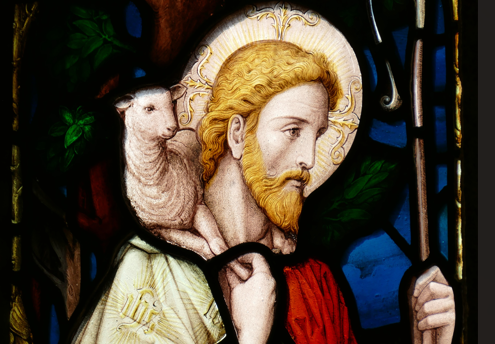
As a Christian, I take seriously Jesus’ words to forgive, “Not seven times, but, I tell you,seventy-seven times.” Having said that, I’ve heard enough stories – and we all probably have heard stories – of things done that are so reprehensible, so “evil” (is not too strong a word), that were I in the victim’s shoes, I don’t know that I could forgive. If there is something you find hard to forgive, I encourage you to talk to Jesus. Maybe tell Jesus what happened, tell him your feelings, tell him how hard you are finding it to forgive. And maybe tell him what you’d like given the situation. Then pay attention to how Jesus might respond. In the Gospels, by how much he healed and cast out demons, Jesus makes clear how much he cares about our healing and wholeness. By speaking of himself as the Good Shepherd, Jesus makes clear that he wants to protect us and for us to have healthy boundaries. By his Resurrection, Jesus makes clear that he wants us to live lives fully alive. To be sure, Jesus told Peter that we are to forgive “not seven times, but, I tell you, seventy-seven times.” But for those circumstances in which we may be finding it difficult to forgive, we may have good reason. Maybe talk to Jesus about your experience and pay attention to how he might respond.
In my own life in all situations so far, I feel called to forgive. I feel called to forgive not only because of what Jesus said in this morning’s Gospel, but also because I don’t want to be weighed down by anger or resentment. I want to know the peace and freedom that comes with forgiving.
My hunch is that most of us most of the time likewise wish to forgive and likewise do not wish to be weighed down by anger or resentment. Each Sunday the liturgy offers a reminder of God’s abundant mercy and of God’s call to us to forgive as we ourselves have been forgiven. As we will pray shortly: “Forgive us our trespasses, as we forgive those who trespass against us.”
Perhaps each Sunday praying the Lord’s Prayer can remind us of this morning’s Gospel and Jesus’ call to forgive, “not seven times, but, I tell you, seventy-seven times.” Perhaps praying the Lord’s Prayer can remind us of God’s extraordinary, lavish and incalculable generosity in all things including God’s forgiveness and mercy. And perhaps praying the Lord’s Prayer might remind us that, though others may have done us wrong, yet the human being is always greater than the evil he commits. We are to take seriously our Lord’s call to forgive. For forgiveness can open us more fully to the joy, peace and freedom Jesus offers through his death and resurrection.























Homily for the Marriage of Joel Diamond and Eliza Cotter


Homily for the Feast of the Baptism of Our Lord