The Way of the Cross
Homily for the Fourth Sunday after Pentecost
June 21, 2026
Homily for the Fourth Sunday after Pentecost
June 21, 2026
Homily for Sunday, June 21, 2026
The Fourth Sunday after Pentecost
Matthew 10:24-39
For Matthew, to be Jesus’ disciple is to do as Jesus does. As Jesus says in today’s Gospel lesson, “A disciple is not above the teacher, nor a slave above the master; it is enough for the disciple to be like the teacher, and the slave… like the master.” We saw this “imitation” of Jesus last week when Jesus commissioned the disciples to do as he had done – “Cure the sick,” he told them, “raise the dead, cleanse the lepers, cast out demons.” And if last week Jesus gave the disciples practical instructions such as, “Take no gold, or silver, or copper in your belts …” in today’s lesson Jesus’ instructions take on a darker tone: “Do not think I have come to bring peace to the earth,” Jesus said, “I have not come to bring peace but a sword.” Then he adds:
For I have come to set a man against his father,
and a daughter against her mother…
and one’s foes will be members of one’s own household.
Further – in Matthew’s Gospel’s first reference to the cross – in today’s lesson Jesus says, “Whoever loves father or mother more than me is not worthy of me… and whoever does not take up his cross and follow me is not worthy of me.”
I want to get back to these challenging sayings of Jesus but first, Thomas à Kempis and his work, The Imitation of Christ.
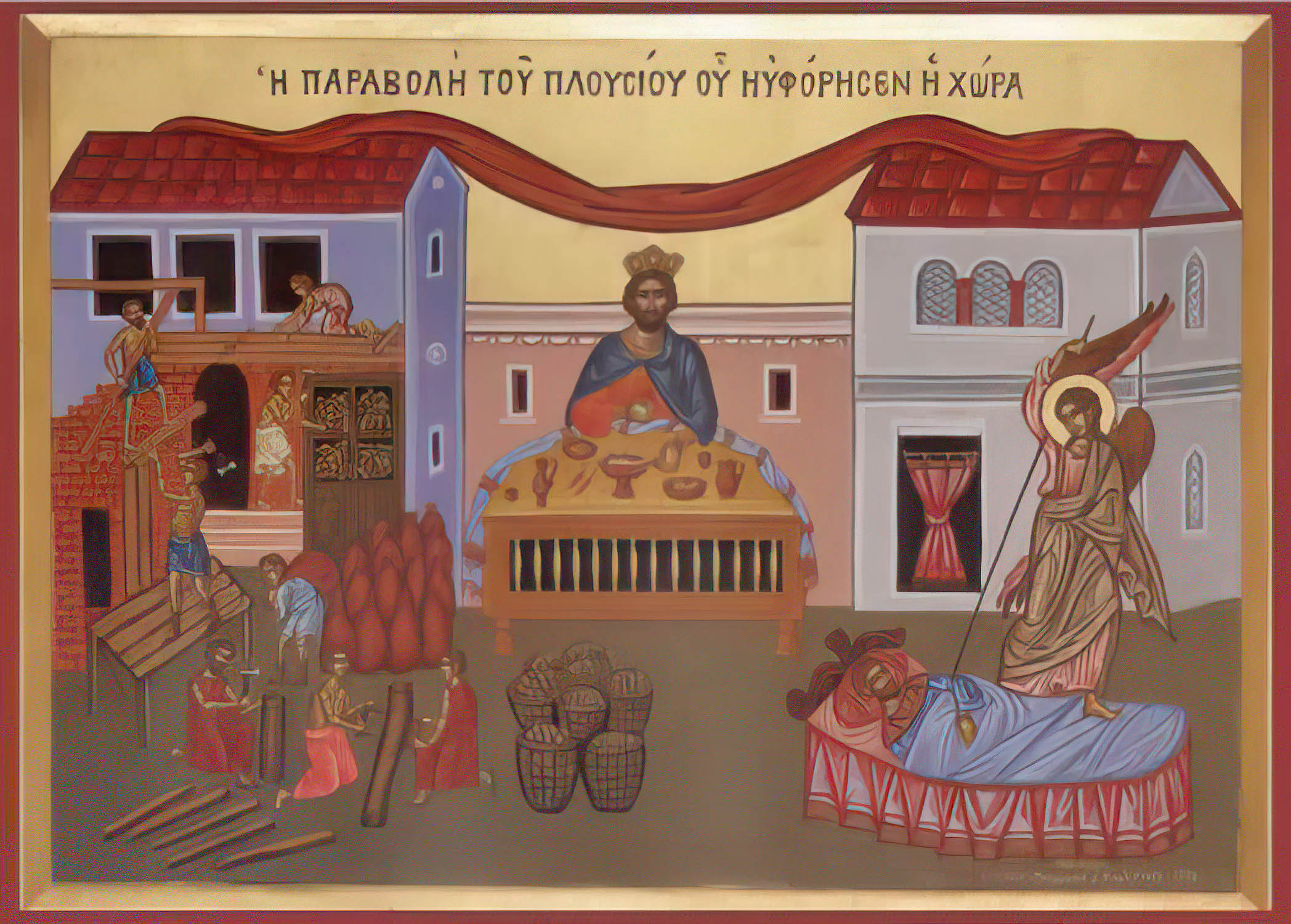
Though never canonized as a saint, Thomas à Kempis was widely-known in the late Middle Ages because of his popular devotional work, The Imitation of Christ, which he wrote for the novices of the Augustinian order, of which he was a member. Similar to Matthew’s understanding of discipleship, Thomas believed that if we truly are to be his disciples, we are to “imitate” Christ. One of the more famous chapters in The Imitation of Christ tells how, though there are many who gladly follow Jesus when he performs miracles and feeds thousands, only a few are willing to accompany him to the cross. Thomas writes:
Jesus has always many who love His heavenly kingdom, but few who bear His cross. He has many who desire consolation, but few who care for trial. He finds many to share His table, but few to take part in His fasting. All desire to be happy with Him; few wish to suffer anything for him. Many follow Him to the breaking of bread, but few to the drinking of the chalice of His passion. Many revere His miracles; few approach the shame of the Cross. (Book 2, chapter 11)
I want to give Jesus’ challenging words some context – not to minimize them but to give them some context. As we hear Jesus say, “Do not think I have come to bring peace to the earth; I have not come to bring peace but a sword,” keep in mind that in Gethsemane, Jesus said to Peter, “Put your sword back into its place, for all who take the sword will die by the sword” (26:52). When we hear Jesus say, “For I have come to set a man against his father, and a daughter against her mother” (which, by the way, Jesus quotes from the prophet Micah (7:5-7)), keep in mind that in Matthew Jesus quoted to the rich young ruler in chapter 19 the fifth commandment, to “Honor your father and mother” (19:19), and that in chapter 15 Jesus scolds the Pharisees for not keeping the command to honor one’s father and mother (15:4-6). When we hear Jesus say, “Whoever loves father and mother more than me is not worthy of me, and whoever loves son or daughter more than me is not worthy of me,” note that Jesus is not rejecting the family but relativizing the family – as important as family relations are, Jesus says our relationship with him is even more important. Recall how in chapter 12, when pressed about his mother and brothers wanting to speak with him, Jesus responds, “Who is my mother, and who are my brothers?... Whoever does the will of my Father in heaven is my brother and sister and mother” (12:48-50).
And when we hear Jesus say, “Whoever does not take up the cross and follow me is not worthy of me;” or again, “Those who find their life will lose it,” keep in mind that in Matthew Jesus not only promises that God will watch over his disciples – as in today’s lesson, “Are not two sparrows sold for a penny? Yet not one of them falls to the ground apart from your Father… So do not be afraid; you are of more value than many sparrows” – but Jesus promises also that he will reward his disciples. In chapter 19, “Peter said… ‘Look, we have left everything and followed you…’ Jesus said… ‘Truly I tell you… everyone who has left houses or brothers or sisters or father or mother or wife or children or fields for my… sake will receive a hundredfold and will inherit eternal life’” (19:27-29).
Even though Jesus in Matthew said, “The gate is narrow and the road is hard that leads to life, and there are few who find it” (Matt 7:14); and even though Thomas à Kempis said, “All desire to be happy with him, but few wish to suffer anything for him,” it would be a mistake to conclude that a more faithful discipleship of Jesus therefore is a discipleship in which we suffer more. For as Jesus said in Matthew chapter 11: “Come to me, all who labor and are heavy-laden, and I will give you rest… For my yoke is easy, and my burden is light” (11:28-30).
Ignatius of Loyola “squares” this “circle” of the challenge of being Jesus’ disciple with the reward and rest of being Jesus’ disciple by noting that there are different stages in the spiritual life. For those in the early stages, following Jesus will feel difficult, for changing our lifestyle and habits is difficult! But for those who are progressing in the spiritual life, following Jesus will feel freeing, even “easy,” because living in union with God is what we were created to do. “To those who have, more will be given, and they will have an abundance,” said Jesus (Matt 13:12). The closer we follow Jesus and the more we respond to his love, the more freeing, even “easy,” it is to follow him – still effortful, but “easy.”
I will leave us with two quotes about “taking up our cross” and learning to find it, maybe not “easy,” but at least life-giving. The first comes from Thomas à Kempis The Imitation of Christ:
The cross… awaits us everywhere. No matter where we may go, we cannot escape it… Turn where you will – above, below,without or within – you will find a cross… If you carry it unwillingly, you create a burden for yourself and increase the load, though you will still have to carry it… If you carry the cross willingly, it will carry you and lead you to the desired goal… (Book 2, chapter 12)
The other comes from The Book of Common Prayer in the Morning Prayer service. Here is the “Collect for Fridays” on page 99:
Almighty God, whose most dear Son went not up to joy but first he suffered pain, and entered not into glory before he was crucified: Mercifully grant that we, walking in the way of the cross, may find it none other than the way of life and peace; through Jesus Christ your Son our Lord. Amen.

Homily for the Seventeenth Sunday after Pentecost
















Homily for the Marriage of Joel Diamond and Eliza Cotter

Homily for the Feast of the Baptism of Our Lord