Follow After
Homily for the Second Sunday after Pentecost
June 7, 2026

Homily for the Second Sunday after Pentecost
June 7, 2026
Homily for Sunday, June 7, 2026
The Second Sunday after Pentecost
Matthew 9:9-13, 18-26
By the first two words of the following quote, some may be able to guess the source:
Cheap grace means grace sold on the market like cheap jacks’ wares. The sacraments, the forgiveness of sin, and the consolations of religion are thrown away at cut prices…. Cheap grace is the preaching of forgiveness without requiring repentance, baptism without church discipline, Communion without confession, absolution without personal confession. Cheap grace is grace without discipleship, grace without the cross, grace without Jesus Christ, living and incarnate.
Any guesses as to the source of this quote…? These words come from Dietrich Bonhoeffer’s The Cost of Discipleship, in which Bonhoeffer distinguishes between what he calls “cheap” and “costly” grace.
But “The Cost of Discipleship” was not Bonhoeffer’s title. The title “The Cost of Discipleship” was an editorial decision made by the book’s first English publishers in London in 1948. Bonhoeffer himself titled the book Nachfolge, or “following after.” Though The Cost of Discipleship is now the book’s definitive title, underneath the English title – chosen in the aftermath of the Second World War when England needed to mobilize its young men and to prepare them for the sacrifice and “cost” of war– [underneath this English title] lurks the hubris of thinking that we know what discipleship with Jesus will look like, that we know what discipleship with Jesus will feel like. For example, the title not so subtly invites readers to regard following Jesus as a kind of heroism (which probably was needed during the War): “When Christ calls a man, he bids him come and die,” is an oft-quoted line that – through the lens of this English title –makes discipleship sound “muscular” and human-centered. Such human striving is contrary to Bonhoeffer’s understanding of God’s grace and leaves little room for the Holy Spirit to create in us the kind of disciple Jesus might actually want us to be.
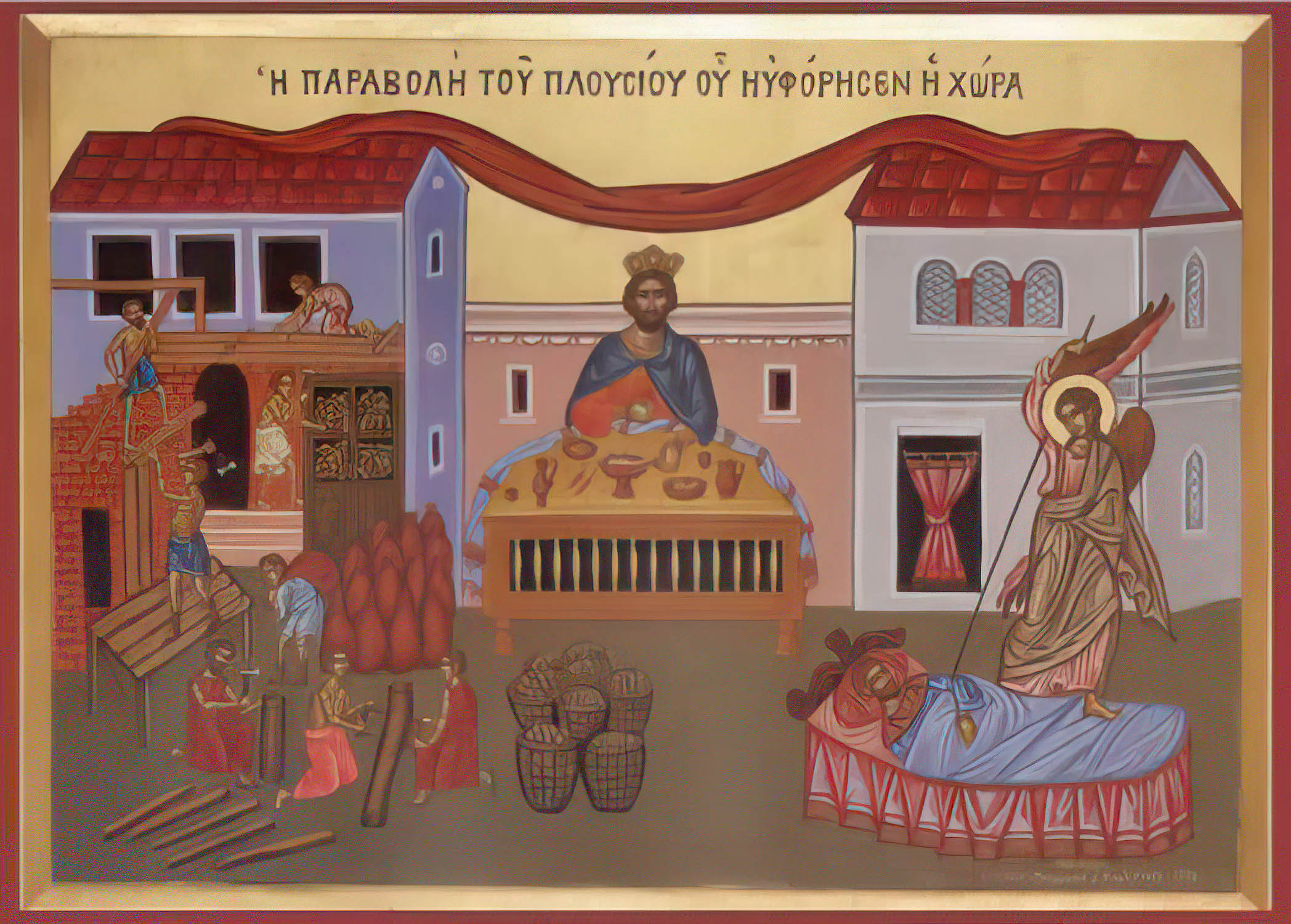
In today’s Gospel reading, Matthew’s response to Jesus’ call is truly a Nachfolge, a “following after” – when Jesus says to him, “Follow me,” Matthew simply “got up and followed.” The text suggests that Matthew had absolutely no idea – no assumptions, no preconceived notions – of what following Jesus would be like. He gets up and follows. And lest we be inclined to impose upon Matthew a human-focused, “costly” sort of discipleship, Jesus in this morning’s reading pulls us back to reality: “Those who are well have no need of a physician, but those who are sick… I have come to call not the righteous but sinners.” Jesus’ discipleship is for the infirm and the fallen, for those who have no “capital” and are unable to afford a “cost.”
The remainder of this morning’s reading confirms that following after Jesus is not a heroic endeavor. “While he was saying these things,” writes Matthew, “A leader came in and knelt before him, saying, ‘My daughter has just died, but come lay your hand on her, and she will live.’ And Jesus got up and followed him, with his disciples. Then suddenly a woman who had been suffering from a flow of blood… came up behind him and touched the fringe of his cloak, for she was saying to herself, ‘If I only touch the fringe of his cloak, I will be made well.’” Jesus moves in every-day human experience: “My daughter has just died;” “I want to be made well.” Jesus moves in every-day human experience,and his disciples nachfolgen, or “follow after.” The disciples, too, sometimes were tempted to think that discipleship ought to be something heroic, something “more” than merely “following after” –James and John once asked if they might be seated, one at Jesus’ left and the other at his right, in his glory (Mk 10:35-45); Thomas once urged his fellow disciples to return to Judea with Jesus, so “that we may die with him” (John11:16); and in the garden Peter drew his sword and cut off the ear of the high priest’s slave (John 18:10) – [the disciples themselves sometimes were tempted think that discipleship ought to be something “more,”] but discipleship is at root a Nachfolge, a simple “following after” Jesus.
Perhaps the editorial team that gave Nachfolge its English title had been so steeped in the war time mindset that they wanted to avoid any title that could be construed with weakness or “surrender.” Or perhaps they assumed that their post-war English audience would not buy a book that was associated with weakness or “surrender.” But authentic Christian discipleship tends to be about weakness – “Those who are well have no need of a physician” – and Christian discipleship tends to involve surrender – Matthew “got up and followed.”
Bonhoeffer wrote The Cost of Discipleship in 1937 at the age of 31. Several years later, his understanding of discipleship had matured such that shortly before his death in a Nazi prison, Bonhoeffer wrote in a letter to his fellow Lutheran pastor, Eberhard Bethge, that he recognized the risks of his book and in which he hinted at a more mature understanding of discipleship. Bonhoeffer wrote:
I thought I could learn to have faith by trying to live something like a saintly life. I suppose I wrote Nachfolge at the end of this path. Today I clearly see the dangers of that book… Later on, I discovered, and am still discovering, that one only learns to have faith by… throwing oneself completely into the arms of God, by living in the full this-worldliness of life: living fully in the midst of life’s tasks, questions, successes and failures, experiences, and perplexities – then one takes seriously no longer one’s own sufferings but rather the suffering of God in the world. Then one stays awake with Christ in Gethsemane. And I think this is faith; this is metanoia. (Letters and Papers from Prison)
We who live in Boston’s western suburbs tend to be achievers: we tend to be well-educated, accomplished and in the eyes of the world “successful.” And we live in a country with a history of an ethic of amelioration and self-improvement. While in other circumstances these may be admirable traits, Matthew in today’s Gospel – and also Jesus and also Bonhoeffer later in life – remind us that when it comes to following Jesus, our otherwise admirable worldly qualities may not be what Jesus is looking for. “Those who are well have no need of a physician, but those who are sick,” Jesus said, and, “I have come to call not the righteous but sinners.” When Jesus calls, he most likely is not asking that we respond with, “Yes, here is what I can do to make this world a better place;” or, “Yes, here is the cost I’m willing to pay.” When Jesus calls, he asks rather that we like Matthew simply get up and follow.




Homily for the Seventeenth Sunday after Pentecost

















Homily for the Marriage of Joel Diamond and Eliza Cotter

Homily for the Feast of the Baptism of Our Lord