A Strange Joy
Homily for the Fourteenth Sunday After Pentecost
August 30, 2026
Homily for the Fourteenth Sunday After Pentecost
August 30, 2026
Homily for Sunday, August 30, 2026
The Fourteenth Sunday After Pentecost
Matthew 16:21-28
My homily this morning is about suffering, love and joy. I will invite us to distinguish between avoidable and unavoidable suffering, to consider our loves, and to look more closely at what might bring us joy. But first, basketball.
After game 7 of the Western Conference NBA semifinals this past May, a closely-contested game in which the San Antonio Spurs ultimately defeated the Oklahoma City Thunder, Spurs player Bismack Biyombo, a 33-year-old veteran of the league, spoke of Victor Wembanyama, the 22-year-old phenom who seems on his way to be becoming the next face of the league:
It’s the first time he’s in the playoffs… That’s a lot of pressure, and he’s handled it so well… When you see all the emotions he’s had… and how tough the road has been… It brings joy... He brings so much joy to the sacrifice that the people in this locker room have made. (NY Times, May 31, 2026)
Under pressure – in the “crucible,” if you will, of playoff basketball – Victor Wembanyama found joy and passed it on to his team. Wembanyama could have folded. As the journalist who interviewed them wrote:
Pressure can bury people. A mountain of expectations makes the burden of the moment harder to carry… But that is where Wembanyama found his comfort zone.
And Wembanyama himself said that, despite the pressure, he would do it again:
The crazy things is…I want to do that fifteen,twenty more times… [Because] this is the best basketball that’s being played on the planet right now.
I want to get back to Victor Wembanyama and his joy in the crucible of play-off basketball, but first, today’s Gospel lesson. Matthew writes:
Jesus began to show his disciples that he must go to Jerusalem and undergo great suffering at the hands of the elders and chief priests and scribes, and be killed, and on the third day be raised.
In today’s Gospel lesson Jesus began to show his disciples the pressure and the “crucible,” or crucifixion, he must undergo. But Peter rebuked him, saying, “God forbid it, Lord! This must never happen to you.” To which Jesus responded, “Get behind me, Satan… for you are setting your mind not on divine things but on human things.” Jesus then added, “If any want to become my followers, let them deny themselves and take up their cross and follow me.”
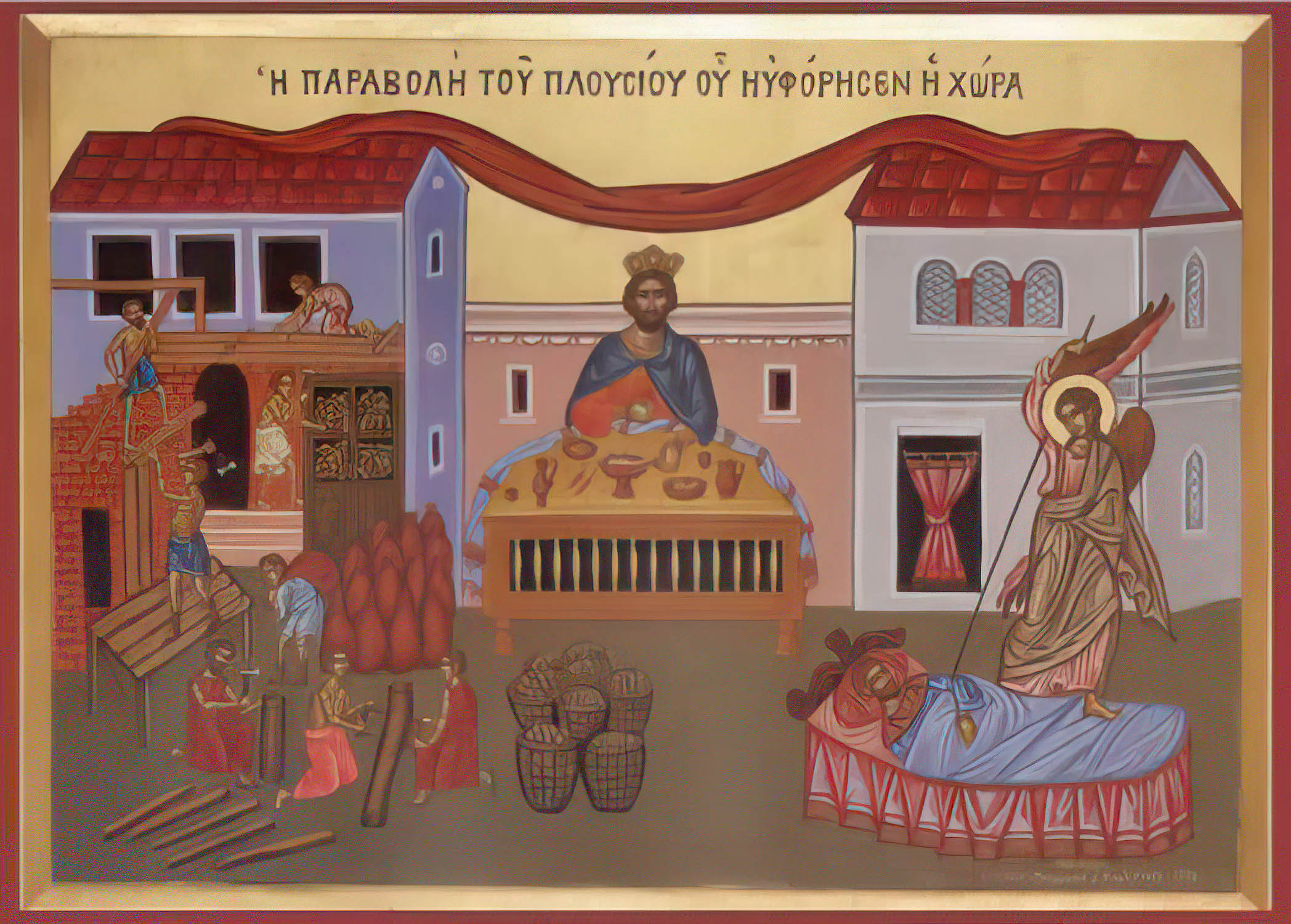
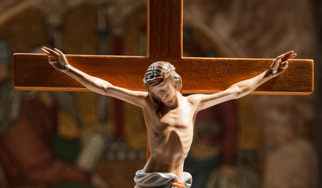
Several years ago my former spiritual director said: “Even on the cross, Jesus experienced joy.” Seeing my puzzled expression, he added,“Because he was doing the Father’s will. Nothing brings more joy than doing the Father’s will.” I recall the author of the Letter to the Hebrews writing that, “For the joy set before him he endured the cross” (Heb12:2), which I thought meant that Jesus was willing to endure the cross in order that he might experience joy on the other side. But to consider that Jesus experienced joy while on the cross was new to me. “This must be an ‘advanced placement' kind of joy,” I remember thinking.
My spiritual director’s words were in the back of my mind when I came across a quote from Julian of Norwich, the 14th-century anchoress, who describes a vision she had of Jesus on the cross:
With a glad countenance our Lord looked at His side, rejoicing as He gazed. I was reminded of the most precious Blood and water that He shed for love of us. And gazing still, He showed me His blessed heart riven in two. And He said: “See how I have loved you.” As if to say: “My dearest, look at your Lord, your God, your Maker, and your endless joy. See the delight and happiness I have in your salvation; and because you love me, rejoice with Me.” (Ch 24)
Further– reminiscent of Victor Wembanyama saying, “Maybe I’m crazy… but I want to do that fifteen, twenty more times” – Julian also had a vision in which Jesus said:
I saw in truth that He would have died as often as He could, and love would never let Him rest until He had done it. I looked with great diligence to learn how often He would die if He could, and in truth, the number exceeded the power of my understanding to such an extent that my reason could not comprehend it or take it in. And even when He had died,or would have died, this many times, He still would count it as nothing for love, for all seems very small compared to His love.
As shocking as it was for Peter to hear that Jesus “must… undergo great suffering…and be killed, and on the third day be raised,” and as surprising as it might be to contemplate how even on the cross Jesus experienced joy, Jesus did need to undergo great suffering and be killed, and Jesus did experience joy even on the cross, because he was doing the Father’s will.
What might Jesus’ suffering and joy mean for us to whom Jesus says, “If any want to become my followers, let them deny themselves and take up their cross and follow me”? In these verses, I’m not hearing Jesus say that,if we would be his disciple, we must suffer. To be sure, some suffering is unavoidable, and Jesus can help us through these times of suffering. But I’m not hearing Jesus say that suffering is a prerequisite for discipleship. Given Jesus’ joy on the cross, and given Jesus’ love for us, when Jesus says “If any want to become my followers… let them take up their cross,” I wonder several things: I wonder if Jesus is inviting us to let our loves lead us come what may – to love, and if we suffer, we suffer. I wonder if Jesus is inviting us to discern which suffering might truly be necessary and unavoidable, and which suffering might be avoidable and can be let go. We cannot avoid illness and death, but we can avoid the suffering we ourselves generate by, for example, unrealistic expectations, often for ourselves. I wonder if in these verses Jesus also might be inviting us to discern the Father’s will for us, and to pray for the courage to do it. For knowing the Father’s will for us and doing it can be a source of deep joy, a joy we perhaps might experience even when we suffer.
Though Victor Wembanyama’s “crucible” in which he found joy is only a game and far from the unavoidable suffering we experience from, say, sickness and death; yet even in our unavoidable suffering, with Jesus – who himself knew joy as he suffered on the cross – [even in our unavoidable suffering,] I wonder if we might be open to the possibility of joy. A strange, strange(!) joy, connected to love, that has the power to draw us closer to the Father’s heart, and to Jesus, who makes him known.


Homily for the Seventeenth Sunday after Pentecost













Homily for the Marriage of Joel Diamond and Eliza Cotter

Homily for the Feast of the Baptism of Our Lord